
Tariff talk: Director of Transportation & Regulatory Affairs breaks down the latest news
Confused by all the numbers and acronyms related to the recent Supreme Court decision and subsequent statements? We sure were, and decided to understand for ourselves a little better (with a polite assist from AI to track down information sources…) – Gary Williams, Director of Transportation and Regulatory Affairs, U.S. Identity Preserved Alliance
What the Supreme Court took away:
The Court held that the International Emergency Economic Powers Act (IEEPA) does not authorize the president to impose tariffs, only to “regulate” international commerce in other ways during a national emergency.
In doing so, it struck down nearly all of the Administrative Branch’s “reciprocal” tariffs on dozens of countries that are justified as necessary to address trade deficits.
The ruling also invalidated specific IEEPA‑based tariffs on products from China, Mexico and Canada that had been tied to a declared emergency over drug trafficking and illegal immigration.
The decision underscored that the power to impose tariffs is an exercise of the taxing power, which the Constitution assigns to Congress, and that IEEPA’s text cannot be stretched to give the President a free‑floating tariff authority.
Tools the White House can still use:
Despite losing IEEPA as a catch‑all tariff vehicle, the Administrative branch retains several statutory paths embedded in the Trade Act of 1974 and other laws that can still support new or continued tariffs, though usually with more process, limits and litigation risk.
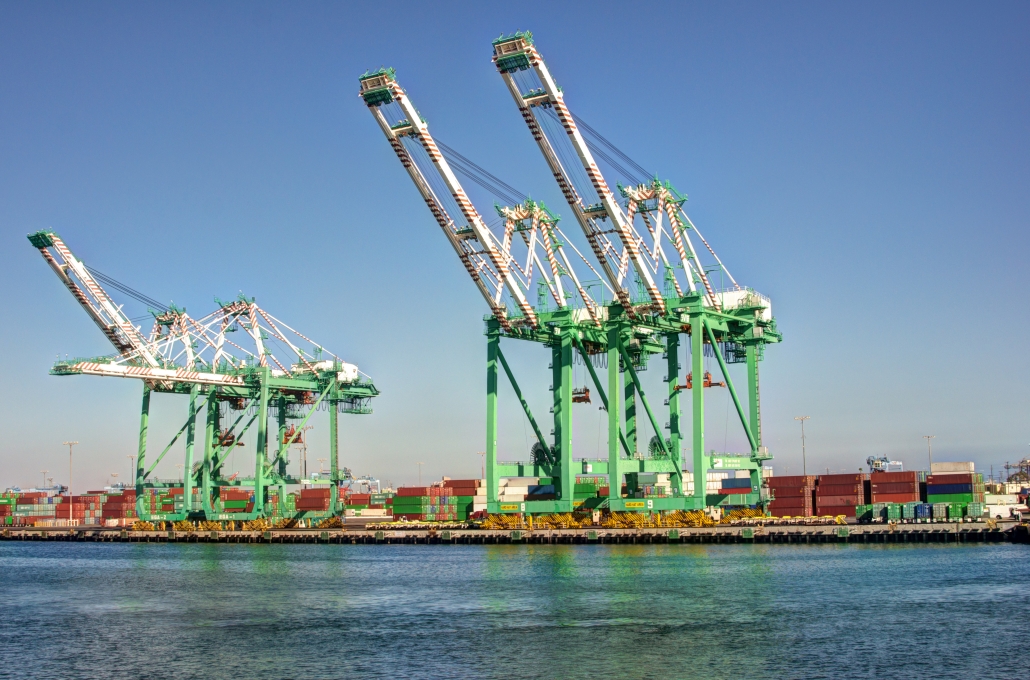
Section 301: “Unfair trade” tariffs (“China Built Ships, Ship-to-Shore Cranes, and Container Chassis Tariff”):
Section 301 of the Trade Act of 1974 allows the U.S. Trade Representative (USTR) to investigate and respond to “unreasonable,” “discriminatory” or otherwise unfair foreign trade practices that burden U.S. commerce.
After such an investigation and finding, the statute permits retaliatory tariffs or other trade measures targeted at the offending country; Trump relied on this authority extensively in his first term to impose tariffs on Chinese imports, and those measures survived multiple court challenges.
The main constraint is timing: A fresh Section 301 case requires an investigation, fact‑finding and formal determinations, which can take months, so it cannot instantly “swap in” for tariffs that vanished with the IEEPA ruling.
The Administrative Branch has already announced that he is initiating several new Section 301 and related investigations as part of his response to the Court’s decision, signaling that this tool will be central to his next‑phase tariff strategy.
The USTR proposed 301 tariffs on China built ships, ship-to-shore cranes and container chassis has currently been delayed until October 2027. Questions remained on definitions within the tariff language, and a number of national agriculture organizations have remained on task to request more information and definition while these tariffs remain “on the shelf” for 7 more months.
Section 122: “Balance‑of‑payments” global surcharge:
Section 122 of the 1974 act authorizes the President, in situations of “large and serious” U.S. balance‑of‑payments deficits or fundamental international payment problems, to impose temporary across‑the‑board import surcharges.
Tariffs under Section 122 are capped at 15 percent ad valorem and can last for up to 150 days unless Congress affirmatively extends them, making this authority more constrained than the open‑ended IEEPA approach.
Section 122 has already been invoked in a new proclamation imposing a global tariff starting at 10 percent “over and above” existing duties, framed as a temporary import surcharge to address alleged balance‑of‑payments problems.
Economists and legal analysts note that the United States is not currently in a classic balance‑of‑payments crisis, so any Section 122 tariffs are almost certain to face court challenges on whether the statute’s conditions are actually met.
Section 232: “National security” tariffs:
Section 232 of the Trade Expansion Act of 1962 allows the president to restrict imports, including through tariffs, if the Commerce Department finds that specific imports threaten U.S. national security.
This tool was used in President Trump’s first term to impose steel and aluminum tariffs, and in his post‑ruling comments he emphasized that all “national security tariffs under Section 232” remain in place and “in full force and effect.”
Because Section 232 focuses on security rather than economic emergencies, it is unaffected by the IEEPA ruling; however, it too has been debated in Congress and in ongoing litigation over the breadth of the President’s discretion.
Section 338 and other dormant authorities:
Section 338 of the Tariff Act (an older retaliatory authority referenced by Greer) could, in theory, support tariffs of up to 50 percent on countries the president deems to be treating U.S. commerce in a “disadvantageous” or discriminatory manner.
While rarely used in modern practice, it adds to the menu of statutory levers that the White House lawyers and USTR may explore to rebuild tariff pressure on selected trading partners.
The emerging path forward:
Taken together, the ruling creates a shift from a single, sweeping emergency statute to a patchwork of targeted trade laws that come with clearer limits, procedural requirements and more obvious points of legal attack.
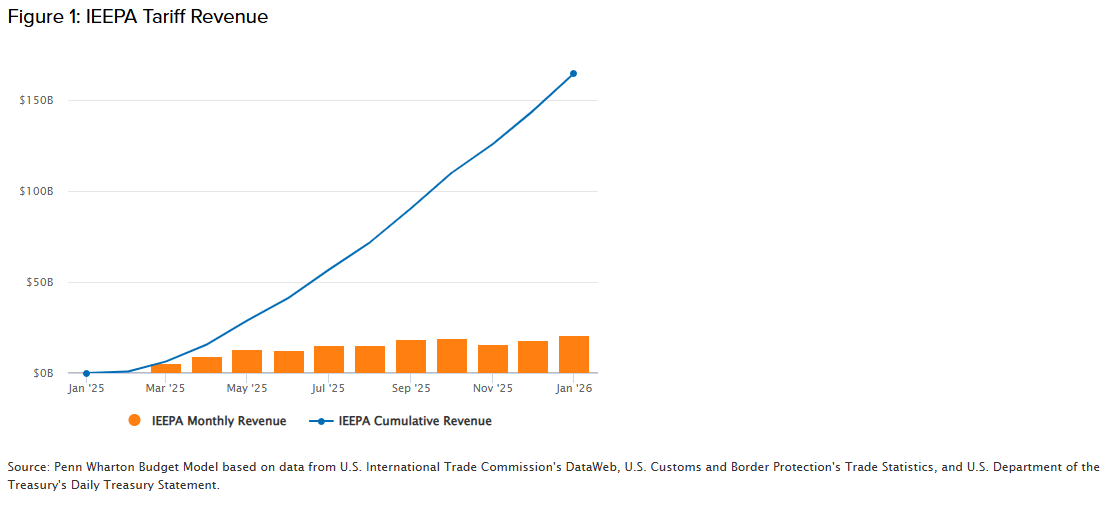
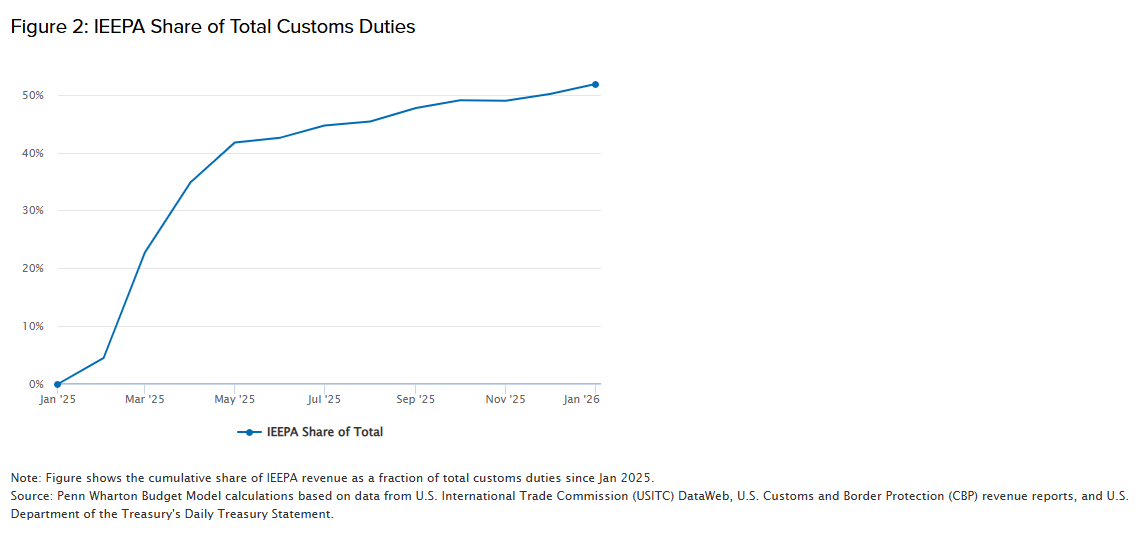
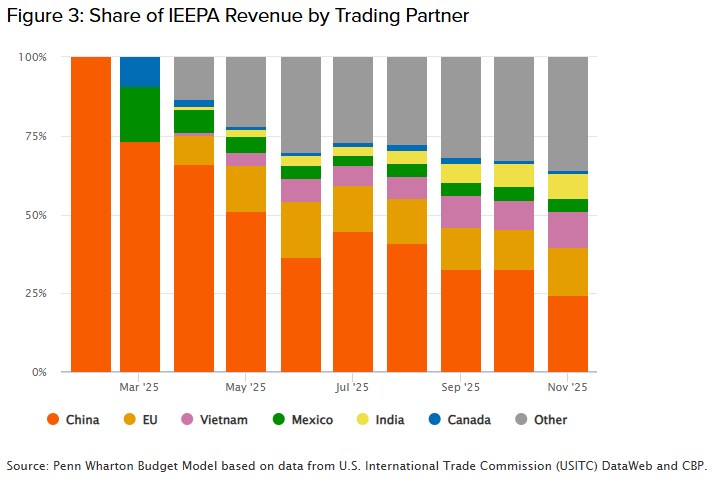
IEEPA can no longer serve as an all‑purpose vehicle for reciprocal or politically driven tariffs; those duties are being dismantled and may generate large refund liabilities.
In response, the administration is leaning on Section 122 for a time‑limited global surcharge, Section 301 for country‑ and practice‑specific retaliation, and Section 232 for security‑framed tariffs that remain legally intact for now.
President Donald Trump and USTR Jamieson Greer have made clear that tariffs will remain central to the administration’s trade strategy, even if each new measure now has to be anchored in more traditional trade statutes rather than in open‑ended emergency powers.
How is transportation affected?
-
Less imports due to tariffs mean even less freight in the form of containers and vessels available
-
The structure of the 301 China built ship tariffs will drive container lines to “cost in” either the actual tariff paid, or the cost through lost efficiency, lower service, and/or cost of reallocating ships so that non-China built ships call U.S. ports (or a combination of both) to be embedded in the rate quote to export containers – without transparency, shippers will not be able to identify the cost increase that resulted from this versus other costs and assumptions that are involved in the pricing matrix. It is unknown how much will be absorbed by container lines to exporters, versus passed through in rate cost.


Leave a Reply
Want to join the discussion?Feel free to contribute!