
IP Crop Network – End of June report
Now that planting is done, farmers across the Midwest are playing the waiting game. During this time of year, it’s common to scout for diseases, insects and weeds, and address these issues accordingly before the crops get too big. Since rising temperatures can increase the risk of insect or disease infestations, a thorough scouting schedule will help identify potential problems in the field.
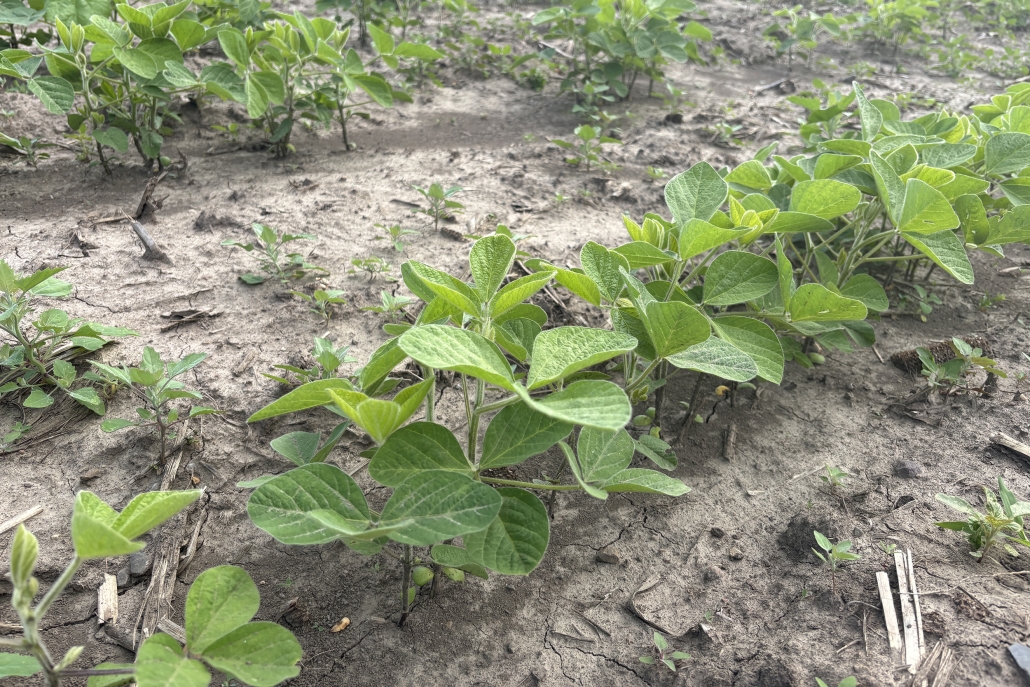
Everything in Michigan is looking pretty decent despite a period of excessive rainfall. Early planted corn is knee high and has good color. Beans are growing quickly now that the heat has arrived, and they are at 91% emergence across the state. The first planted ones are about 10” tall or more and mostly range across the fair to good condition. Spot spraying for weeds has taken place by some farmers in the beans before they get too big, but overall, the crops are pretty clean. Some spots had to be replanted due to excessive precipitation, but mostly the crops came up the first time.
The recent heat and moisture in Wisconsin are a welcome event after a prolonged period of cooler than normal temps. The dry subsoil concerns are somewhat diminished for now – 74% of subsoil falls into the adequate moisture range – while crop and weed growth are robust. The window for post-herbicide application is closing soon, and planting has been finished for a few weeks. The crop appears short in stature and stands are less than ideal in populations with the earliest planting dates, especially for drilled soybeans on heavier soils. Nearly 60% of Wisconsin soybeans fall into the good condition category, while only 10% are in the excellent category. No flowering has occurred yet in the northwestern part of the state, but buds will appear within days. Across the state, the NASS report shows 3% flowering. The edible bean emergence looks to be good as most of those are in irrigated sands.
In Illinois, IP beans are finally starting to grow. They were slow to grow for a while, but the recent heat has helped jump start the process. The weather is going to be very hot in the next 7-10 days, which should help the beans. Currently, the NASS report puts emergence at 90%, with over 60% being in the good to excellent condition category.
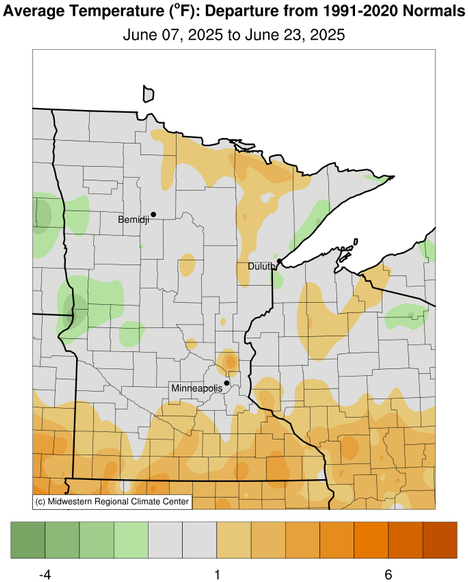
Figure 1, temperature
In the last two weeks, temperatures have been near average across most of Minnesota. In the southern part, temperatures were 1-3°F above average, encouraging rapid soybean growth (Figure 1). Additionally, in the southern region and the northwestern tip, less rainfall than usual was recorded, ranging from 0.5 to 2 inches (Figure 2), which could lead to drought stress in the future. In southern Minnesota, early planting dates are reaching the R1 stage. Soybean flowering is a critical phase for high yield, and 5% of soybeans across the state are blooming.
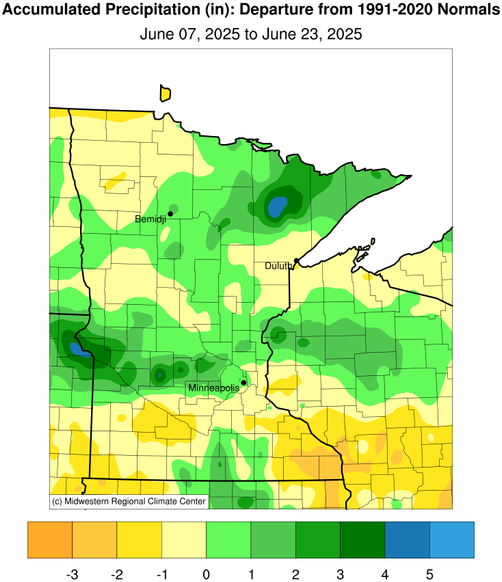
Figure 2, precipitation
North Dakota had a significant storm on June 20. This storm had high winds, tornados, hail and heavy rain. Many acres and farms were affected and are still working to determine the crop damage. Early indications suggest losses will likely be less than anticipated, but we will need to see how the soybeans respond over the next few days. During the storm, many farmers and elevators also lost grain storage due to the high winds. This is problematic since it is likely that some of the damaged grain bins will not be able to be repaired by harvest.
SSGA’s IP Crop Network is published twice a month, highlighting growing conditions for identity preserved crops from different regions around the country. The reports include both firsthand accounts and data from the National Agricultural Statistics Service (NASS) weekly Crop Progress reports.


Leave a Reply
Want to join the discussion?Feel free to contribute!