
IP Crop Network: August 26 report
Late August is a busy time of year on and off the farm. Kids are getting ready to go back to school and families are soaking those last few days of summer before the calendar gives way to fall.
Soy Connext was held last week in Washington D.C., and many of our farmers and industry contacts were busy with this event, visiting buyers and industry colleagues. By this point in the growing season, farmers are starting to get excited about the harvest ahead.
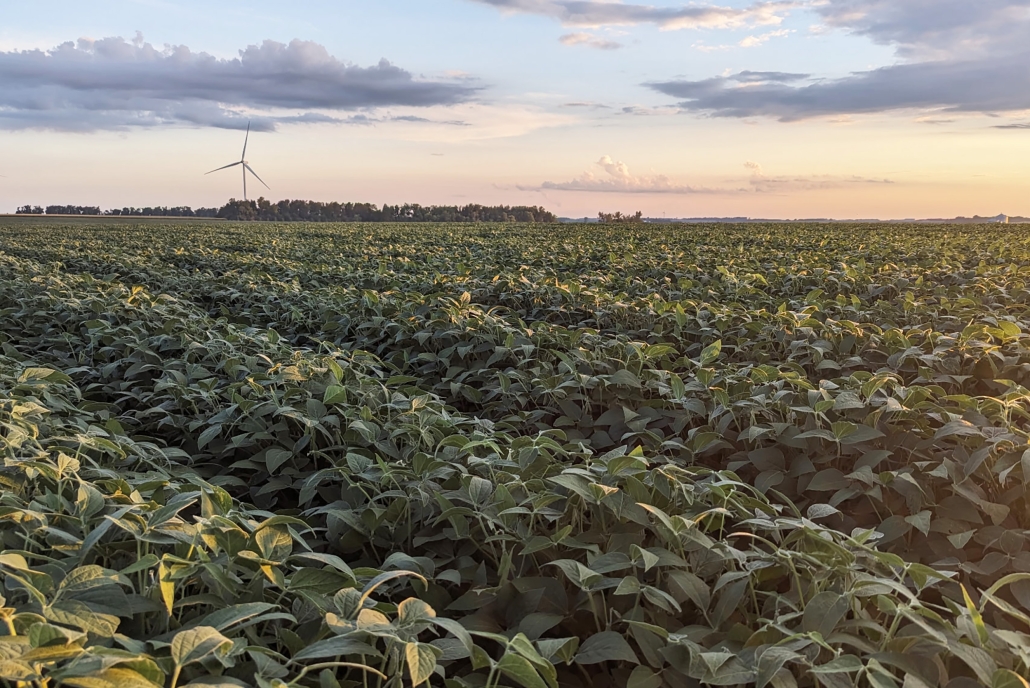
Southeast Michigan has been receiving pretty timely rains the last few weeks to carry through the dry spells, so conditions are looking pretty decent. Other parts of Michigan missed several of these rains and things are looking much worse with firing of the lower leaves on the corn and a gray color to the soybeans in spots. Overall, both corn and soybean conditions fall in the fair-to-good range. Soybeans have a decent number of pods, so farmers are hopeful for a good yield as long as they fill well. About 95% of soybeans have set pods. Most of them are of good height, which should make it nicer for harvest. The first planted corn is just starting to dent but most is still in the milk stage. The rains as of late should help pack in the starches as long as it doesn’t run out of nutrients from the excessive rainfall earlier this year.
The crops in northwest Wisconsin continue to appear lush and healthy. Rains have continued to be both timely and adequate. Soybeans are taller than normal and continue to flower while pods are filling. Wisconsin is currently a little behind other states with 86% pod fill, but still on track with the state average for this time of year. With the continued moisture, seed sizes should be above average as long as disease and insect pressures remain low. Overall, the soybean quality falls within the good to excellent range. The edible beans are coloring and look to be ready for harvest normally and on schedule. The corn crop appears to be on normal maturity pace with denting just beginning on earliest planted acreage – about 22% across the state.
In North Dakota, the crop has continued to improve over the past couple of weeks. Certain areas are still a little bit behind normal development, but it’s nothing to be concerned about, as the state is overall ahead of average. As has been the trend around the Midwest, adequate rainfall has led to disease concern, so farmers are watching closely to see if anything develops.
Minnesota received another 2-4” of rain last week, and the beans are starting to show a little too much water. Soil moisture is still mainly in the adequate range but beginning to show more in the surplus range. Soybeans have more of a range here, as 54% fall in the good category, but equal amounts after that in both the fair and excellent categories. 93% of soybeans have set pods.
SSGA’s IP Crop Network is published twice a month, highlighting growing conditions for identity preserved crops from different regions around the country. The reports include both firsthand accounts and data from the National Agricultural Statistics Service (NASS) weekly Crop Progress reports.


Leave a Reply
Want to join the discussion?Feel free to contribute!