
IP Crop Network: June 23 report
Farmers around the Midwest are playing the waiting game right now, as they wait and see what Mother Nature has in store for the summer. Rain has been playing a huge factor, with some places getting too much and others needing more.
In southeast Michigan, weather has been fickle. Before the end of May, when everything was planted, things started off quite dry. Now, everything is becoming too wet with the soybeans turning yellow from too much moisture. Throughout the state, 92% of the topsoil falls in the adequate to surplus moisture content range. The first planted soybeans are about V4 growth stage and the later ones are V1. Surrounding areas have continued to be on the dry side and would appreciate some more rain. Post-spraying will happen once it dries out.
IP crops in northwest Wisconsin have responded nicely to recent much-needed rains. Wisconsin falls into the adequate category for both topsoil and subsoil moisture content. Below normal temperatures are the norm for most of June, but crop development is tracking near normal as planting was without delays. Stands remain strong and uniform, and overall plant health is good. Herbicide applications are largely complete and final nitrogen applications are going on corn. Growth stages on earliest planted soybeans are beginning flower or R1 stage, while corn is at V5-V7. Winter wheat is in grain fill, and most spring cereals are headed. The state could use a little more heat, and insect and disease pressures are very low across the region.
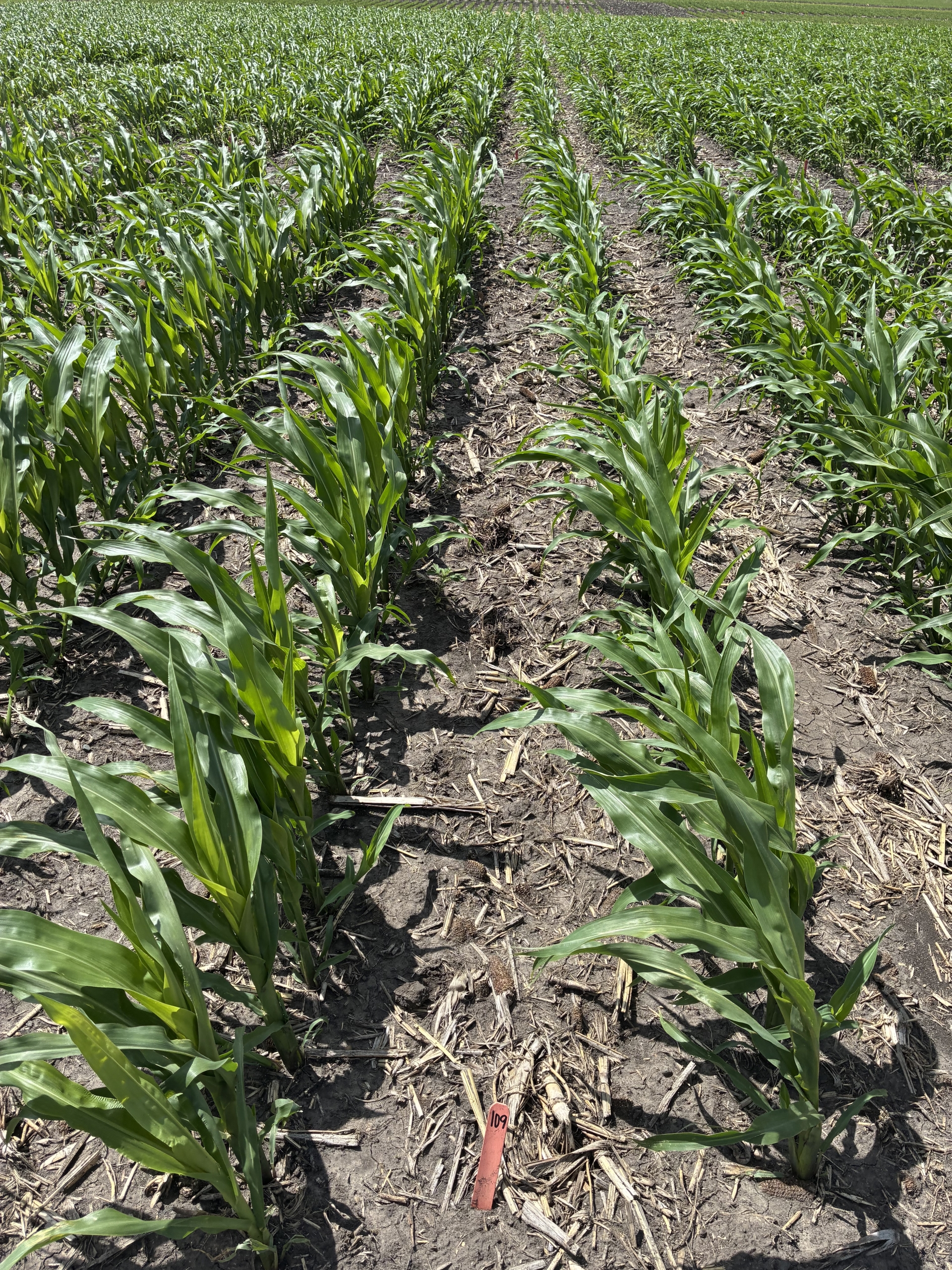 The crop in North Dakota is off to a decent start. While there are a couple of areas around the state that have had too much rain, most of the area is adequate for moisture, as well as having good temperatures for growth. Most of the production has been able to have herbicides applied, so weed control is off to a good start as well. Timely rainfall has really allowed the soybeans to grow, and all acres have had herbicide applied. Most farmers are now scouting their soybean crop for insects and some disease, but so far,there hasn’t been any major incidence of either.
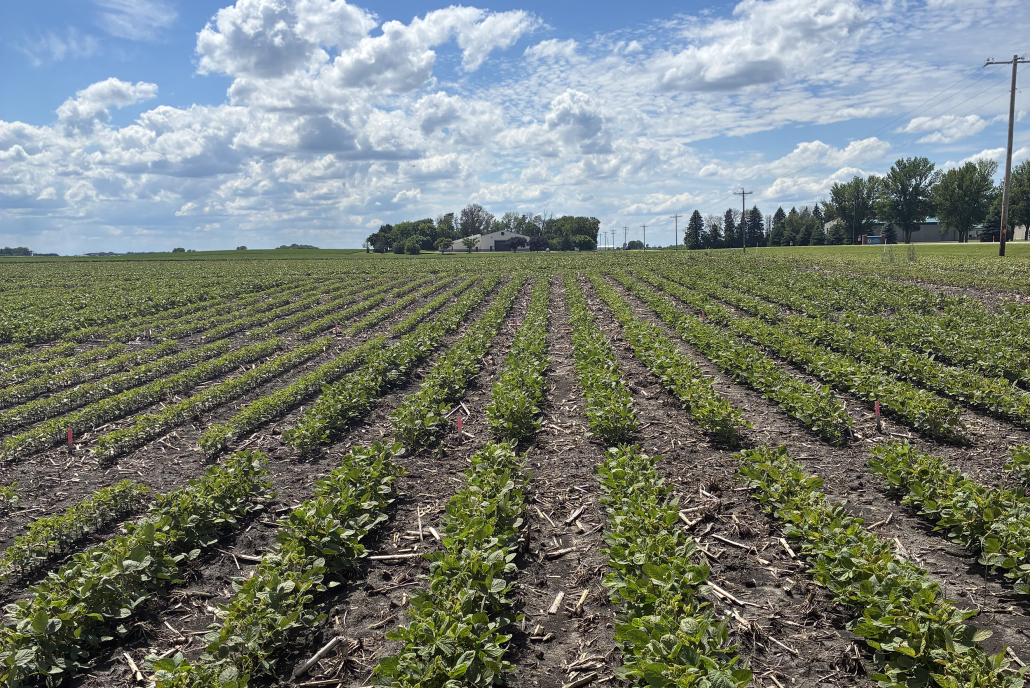
Overall, crops across Minnesota are doing well so far, with low disease and insect pressure across most cropping systems. In southern Minnesota, several soybean fields planted in April are reaching the R1 to R2 growth stages, although iron deficiency chlorosis (IDC) is being reported in southwestern, central and northern Minnesota, while corn is progressing through the V8 to V9 stages. Crops in northern Minnesota are generally about two weeks behind those in southern regions. Small grains in central and northern Minnesota reached the flowering and grain-fill stages. If wet conditions develop, growers should closely monitor fields for Fusarium head blight and rust diseases and consider applying fungicides as needed. However, the U.S. Drought Monitor currently indicates moderate drought conditions in southwestern Minnesota. Abnormally dry conditions are also being reported across parts of southern and northern Minnesota, while central Minnesota remains near normal moisture conditions. Looking ahead, NOAA’s outlook for the next 10 days shows temperatures leaning above average, with precipitation also expected to be above average. Additional rainfall would be welcome across much of Minnesota, particularly in areas experiencing moisture deficits.
This twice monthly report highlights growing conditions for identity preserved crops from different regions around the country. The reports include both firsthand accounts and data from the National Agricultural Statistics Service (NASS) weekly Crop Progress reports.


Leave a Reply
Want to join the discussion?Feel free to contribute!