
United by natto: Summit connects suppliers and manufacturers
Every 18-24 months, the U.S. suppliers and Japanese manufacturers gather together to discuss a rather sticky situation:
Natto.
Several members of the U.S. Identity Preserved Alliance participated in the sixth Natto Summit Nov. 18-21 in Nagoya, Japan. The Summit is a biannual conference organized by USSEC, with the partnership of USIP Alliance and the Japan Natto Cooperative Society Federation (Nattoren), that brings the industry together to discuss opportunities and challenges, gain insights, and build relationships in a unique sector of specialty soy foods.
Natto is a traditional Japanese food made from whole soybeans – usually small and extra-small varieties – that are steamed under pressure and then fermented to give them a distinct flavor, aroma and texture.
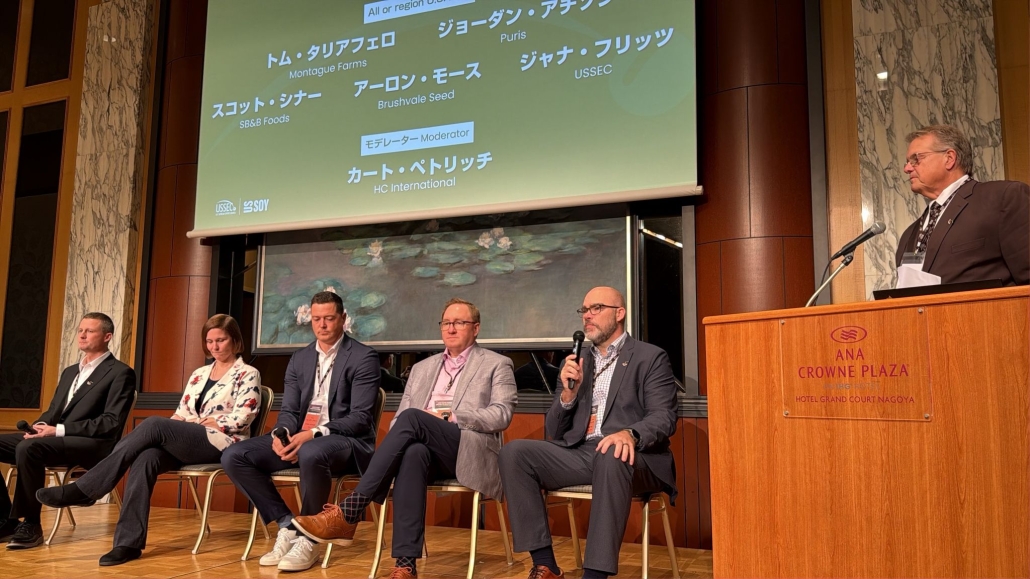
USIP Alliance board director Curt Petrich of HC International moderated a supplier and producer panel that covered a wide swath of U.S. natto production, that includes North Dakota, Minnesota, Wisconsin, Michigan and Virginia. The panel included USIP Alliance Director Jordan Atchinson of Puris, Aaron Mohs of Brushvale Seed, Scott Sinner of SB&B Foods, Tom Taliaferro of Montague Farms and Janna Fritz of DF Seed. Other U.S. processors in attendance included USIP Alliance Vice Chair Jake Noll of Richland IFC, Director Bob Sinner of SB&B Foods and Kuniko Yoshida of IOM Grain.
Topics included rising costs throughout the supply chain, regional crop conditions, breeding for variety production and maintaining long-term supply, artificial intelligence and more.
USIP Alliance’s participation and other natto promotions are farmer-supported through the North Dakota Soybean Council and Minnesota Soybean Research & Promotion Council.
Shane Frederick, manager of strategic programs for USIP Alliance, spoke about the U.S. Identity Preserved assurance plan and brand program and current soy production economics. Frederick highlighted two natto companies that currently display the Identity Preserved United States logo on their retail packaging, Yamada Foods and Yamadai Foods. A third, Marukin Foods, was recently approved.
 Additionally, Fritz spoke about natto variety breeding; Edil Vidal Torres, food technologist from Northern Crops Institute, presented virtually on variety scanning and performance; and Will McNair, director, soy foods and oil for USSEC, gave an U.S. Soy outlook. From the Japan side, participants heard a Japan natto market update and outlook from local experts.
Other topics included promotion of natto exports from Japan, which made a big jump in 2025, including to the U.S., as well as longevity and health and other benefits of fermented soy foods such as natto, tempeh and miso. The panels and presentations sparked an enthusiastic discussion.
Other topics included promotion of natto exports from Japan, which made a big jump in 2025, including to the U.S., as well as longevity and health and other benefits of fermented soy foods such as natto, tempeh, and miso. The panels and presentations sparked enthusiastic discussion.
“It’s the perfect time for natto (in the United States),” said Linda Funk, executive director of the Soyfoods Council, adding that interest in gut health, protein, and plant-based lifestyles make “consumers open to learning more.” But natto needs increased awareness, Funk stressed.
Prior to the Natto Summit, the 30th National Natto Judging Contest took place. In all, there were 179 entries with 19 winners, including the winner of the U.S. Identity Preserved Alliance Award for natto made with U.S. soybeans. That was won by Marukin Foods Co. Ltd., for its Genki Natto Kyushu Honjikomi. That was one of three awards captured by Marukin, which also won the USSEC’s Sustainability Ambassador Award.
U.S. Identity Preserved Alliance will award the trophy for its award next spring.


Leave a Reply
Want to join the discussion?Feel free to contribute!