SSGA provides expertise for Food Soy Procurement Course
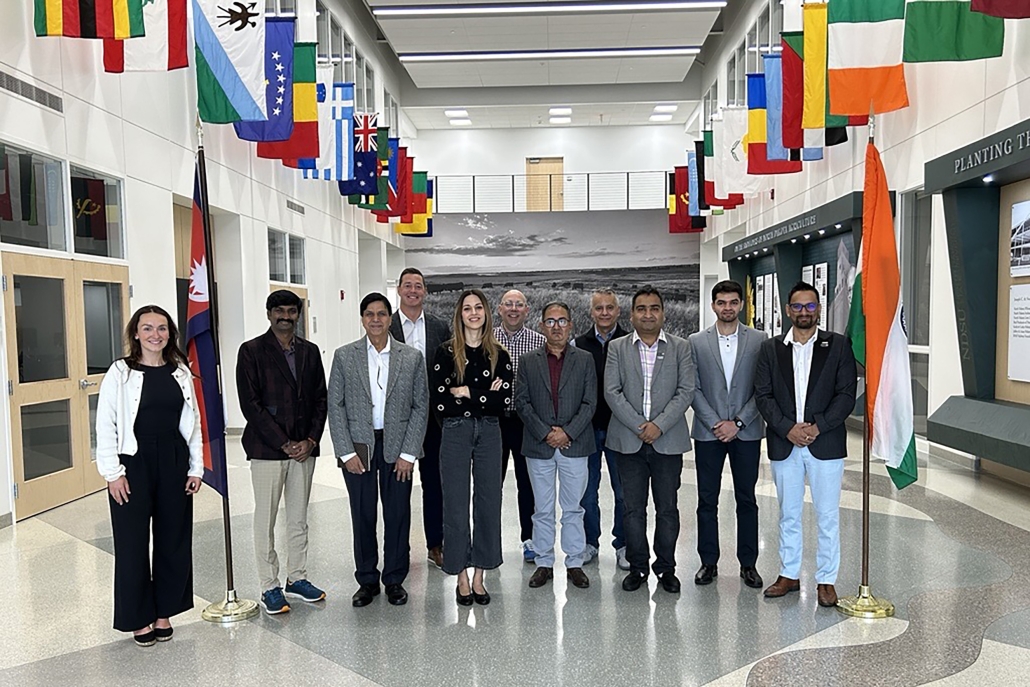
Northern Crops Institute (NCI) welcomed a trade group from South Asia through its doors in Fargo, N.D., June 16-20 for its annual Food Soy Procurement Course. The course, made up mostly of participants from Nepal and India, focused on the unique aspects of sourcing and purchasing high-quality, identity preserved (IP) soybeans for various food products, including soymilk, tofu, soy snacks, miso, natto and tempeh.
“USSEC (The U.S. Soybean Export Council) was kind enough to bring us these participants, who are mainly buyers from food manufacturing businesses that really want to expand their food soy products with IP food grade soy from the United States,” said Liz Benson, program manager with NCI.
Throughout the weeklong program, participants received a crash course on U.S. markets, breeding and testing of soybean varieties, soybean grading, container shipping, how to purchase identity preserved soybeans from the United States and the many advantages of U.S. IP soy.
“One of the challenges we heard predominantly this week is how hard it is for them to get U.S. soybeans to their country,” Benson said. “It’s far, it takes a long time, and it can be expensive, so we try to make connections with processors so they’re able to speed up that process and get a realistic idea of timeframes, so they know when they need to contract and who to contract with.”
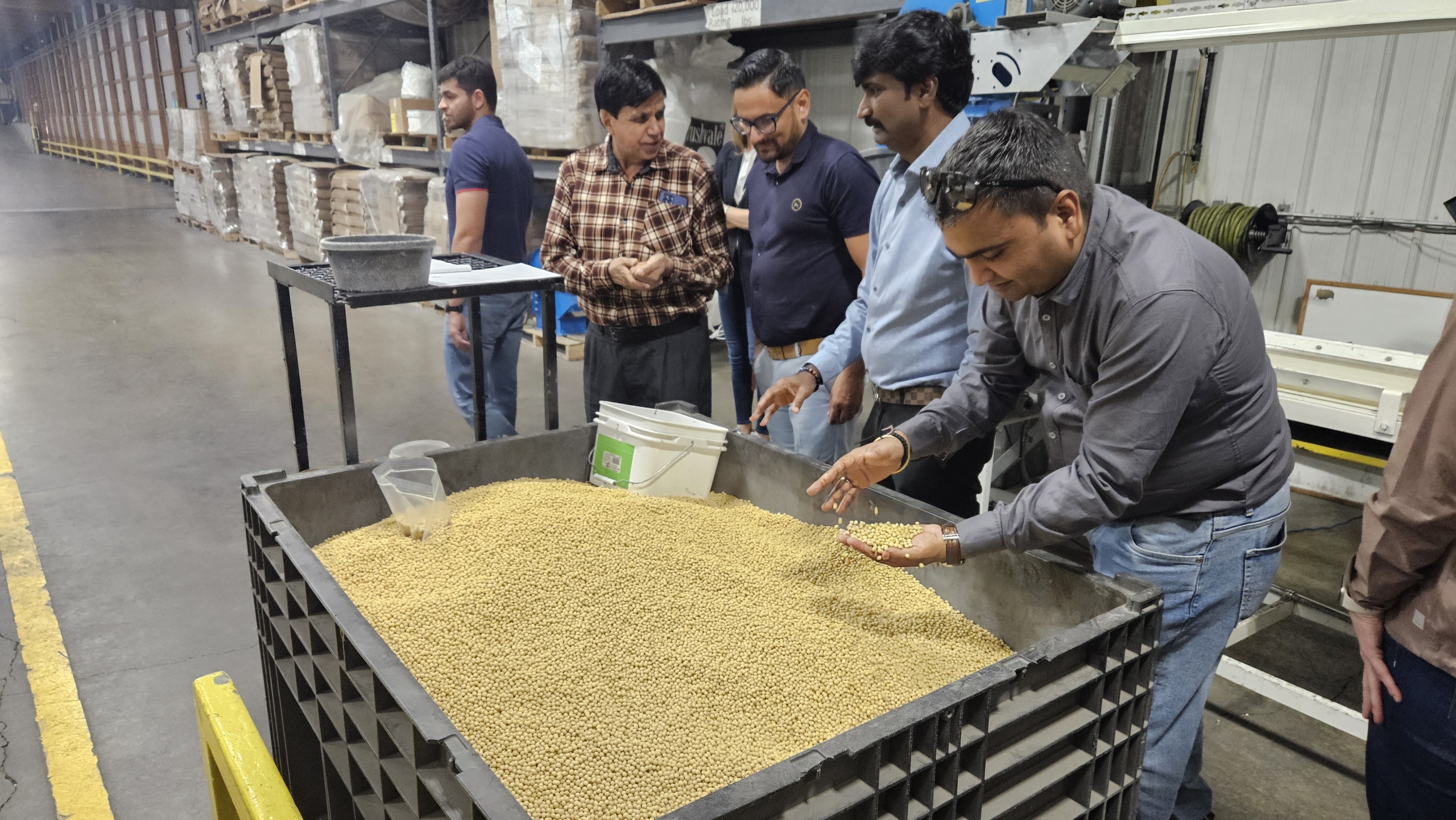 As a sponsor of the course, the Specialty Soya and Grains Alliance (SSGA) spoke with participants on the economic advantages of utilizing IP food grade soybeans, the U.S. soybean grading system and container transportation. Attendees heard from several SSGA members who supply IP soybeans, including visits to SB&B Foods and Brushvale Seed. Representatives from those companies, as well as Puris, HC International, Grain Millers and Richland IFC also presented and met with participants.
“They get to see the IP process firsthand and get a better understanding of the opportunities that are there in the food-grade space to really improve their own products, either just enhance what they already know or start from the beginning,” said Shane Frederick, manager of strategic programs for SSGA. “There’s been a lot of companies that have come through here from Southeast Asia, Japan and this year South Asia who not only get a crash course on IP procurement but also differentiating U.S. IP soy from their other food ingredients.”
Thought exchange
While the participants came from neighboring countries, their challenges and opportunities are unique in that India has substantial tariffs on imported soy while Nepal can acquire it for only a minor duty. Some of the participants are already purchasers of U.S. IP soybeans, but Frederick says there is always more to learn.
“It’s invaluable for them to have the opportunity to learn more about the soybean varieties, breeding, and grading and visit the fields, chat face to face with the farmers who grow their soybeans and tour the facilities that sort, clean and ship them,” Frederick said. “It provides a better understanding of why it costs more but, more importantly, why it’s worth the investment.”
Gaurav Agrawal, whose company Shree Radne Rani International Trading was the first-ever importer of U.S. IP soybeans to Nepal in 2023, participated in this year’s course to broaden his knowledge of the buying process and learn more about U.S. Soy to further develop his products.
“Our markets are very different, but the common basic product is IP soybeans, so why not exchange our thoughts and expertise to develop new products, which can be a win-win situation for both of our markets,” Agrawal said. “Thank you to NCI, SSGA and USSEC from the bottom of my heart for this opportunity.”
The Food Soy Procurement Course was also sponsored by the Minnesota Soybean Research & Promotion Council, North Dakota Soybean Council and South Dakota Soybean Research and Promotion Council.


Leave a Reply
Want to join the discussion?Feel free to contribute!