
IP Crop Network- July update report
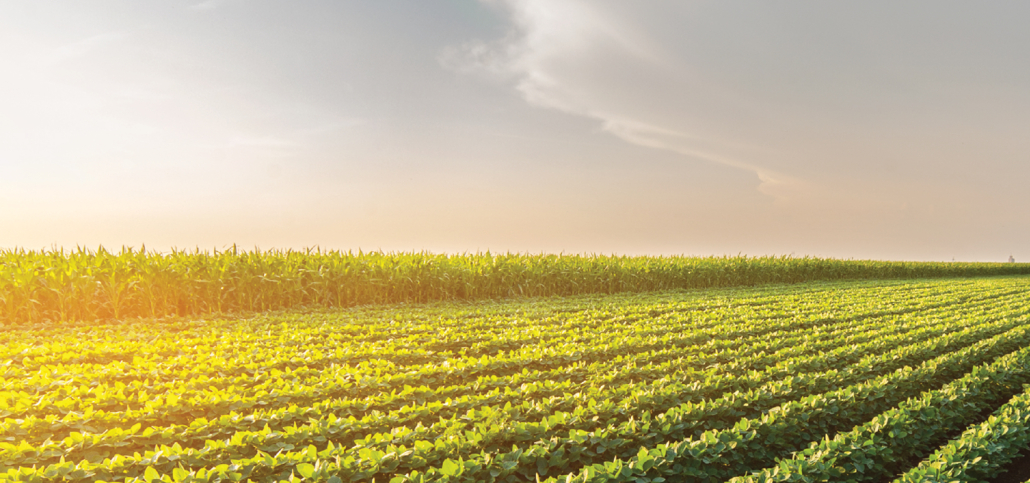
The Midwest knows corn should be “knee high by the Fourth of July,” and extreme heat and humidity in parts of the region have helped blow past that marker. The weather has mostly helped crops grow quickly, while some areas have seen too much rain and are looking for a few dry days in the forecast.
The Michigan soybean crop continues to make progress after passing the longest day of the year. The most advanced fields are now at R2 while others are still in vegetative stages. NASS reports that 25% of the crop is blooming, which compares to the five-year average of 19% at this point. Crop conditions are variable across the state, which has been affected by delayed planting and excess rainfall. NASS has the crop rated at 43% fair, 43% good and 5% excellent. Corn for the most part looks pretty good – first planted is not far from flag leaf while later planted is knee to waist high. 84% of the corn falls within the fair to good range. Wheat will be ready for harvest later this week or early next in the southeast part of the state, and 9% of the crop has been harvested statewide. The past couple of weeks have been very warm in most areas, but temperatures were cool before that, which slowed soybean growth. Stands are adequate in most areas. Post herbicide applications have been effective in controlling weeds but have caused more than normal crop response due to sunny and hot conditions during and after applications. Most crop responses were cosmetic with new growth being healthy and normal.
Wisconsin’s soybean crop is progressing as expected in early July. Emergence is complete, and most fields have entered the blooming stage, with some beginning pod set ahead of the five-year average. June weather included steady rainfall and warm temperatures, supporting vegetative growth and timely crop development. Soil moisture levels are mostly within the adequate to surplus range, which has maintained crop health. This resulted in isolated areas that remain too wet for consistent access or late field applications. Crop condition ratings in Wisconsin are at 54% good to excellent, slightly below last year yet within typical ranges. Most fields display uniform canopy closure and nodulation. As the crop enters reproductive stages, scouting for white mold, sudden death syndrome and insect feeding will be necessary, especially under forecasted warm and humid conditions. Early indicators point to a potentially productive season if July weather conditions remain stable. Ongoing disease management, nutrient monitoring and timely fieldwork will continue to influence yield potential.
Illinois is actually in a slight drought, at odds with the rest of the country. Over 30% of cropland in Illinois is short in moisture for both topsoil and subsoil. Precipitation has been really scattered, and areas that haven’t gotten much rain are showing it in the yards and ditches with dead grass. The lack of rain hasn’t hurt the beans and corn yet – they’re rooting well to get down to the nutrients – but cracks are beginning to show in the field. Beans in east-central Illinois are in R2 but getting close to R3 meaning a fungicide application. Farmers are prepping to get out in the field and do just that. Last week’s hot temperatures helped the corn to tassel, and 21% is tasseled throughout the state. 38% of beans are blooming, and 5% have started setting pods. Overall, Illinois is looking for a general rain to keep the plants healthy.
Minnesota is extremely wet throughout most areas. Soil moisture conditions are over 90% in the adequate to surplus range for both topsoil and subsoil. While crops on tile ground are handling the water, some dry days are needed to let the beans get caught up to where they should be. Soybeans are about 5% below average when it comes to blooming but are overall mostly within the fair to good condition range. Corn is right on track with the 5-year average and falls mostly under the good condition range. There is more rain in the forecast for the next two weeks, so hopes are the forecast lessens on rain amounts.
In North Dakota, the soybean crop is overall average. The weather over the past two weeks has been above average in both temperatures and moisture, which has resulted in good growth.. There are some areas that are dry, but so far, the soybeans are doing well in those areas. Soybeans are ahead of the five-year blooming average, sitting at 24%.
SSGA’s IP Crop Network is published twice a month, highlighting growing conditions for identity preserved crops from different regions around the country. The reports include both firsthand accounts and data from the National Agricultural Statistics Service (NASS) weekly Crop Progress reports.


Leave a Reply
Want to join the discussion?Feel free to contribute!