NCI to host soybean courses

The Northern Crop Institute will host two soybean courses this summer. Industry members and processors of soy foods, foreign and domestic, are encouraged to attend either course in Fargo, N.D. SSGA members are encouraged to invite their customers or potential customers.

Follow the links below for more information on the courses and to register.

The Food-Grade Soybean Procurement focuses on sourcing and purchasing high quality, identity preserved soybeans for food products. The course will be held June 19-23. Learn more here.

INTSOY (Introduction to Soybean) course will be held Aug. 7-11. This course provides an overview of many aspects of the soy industry, including new ideas for soy-based foods, soy as a supplement to fortify foods, soy as animal nutrition and an overview of U.S. soy production. Learn more at this link.

Please email brian.sorenson@ndsu.edu with questions on the courses.

SSGA will hold Fork to Farm Day events at the end of these courses; in Illinois in conjunction with the Illinois Soybean Association on June 26 and in Wisconsin with the support of the Wisconsin Soybean Marketing Board on Aug. 12.

IP Farming course now available at SSGA University

The Specialty Soya and Grains Alliance’s online learning modules, SSGA University, continue to expand.

All that’s missing now is a mascot!

Last week, SSGA University added a new module to its curriculum, a farmer-focused course on growing identity preserved crops.

The new module is a quick, easy and affordable way for farmers curious about or who may be interested in growing identity preserved soybeans and other specialty crops. Those who take the course, learn about what the identity preserved system is and why identity preserved crops are worth growing. Additionally, there are overviews on traceability, processor relationships, opportunities and challenges and best practices for growing identity preserved field crops.

After successfully complete the course, they receive a certificate and a technical manual that allows them to take a deeper dive into the topic.

“As the U.S. looks to expand identity preserved acres, farmers need more information on what their options are and how they might get started,” said Shane Frederick, SSGA’s manager of strategic programs. “This new SSGA University course provides a primer so they can consider identity preserved  as part of their production.”

Launched in fall of 2021, SSGA University now has learning modules that cover the “IP Highway” or full identity preserved system, as well as ones that cover the value of purchasing identity preserved soybeans for foods such as tofu and soymilk; miso and natto; tempeh; soybean meal, soy flours, protein concentrates and isolates; and buying decisions and technical information on identity preserved specialty and ancient grains. There is also a course on containerized shipping and one that covers SSGA’s phytosanitary project and trains companies enrolled in the High Quality Specialty Grain program.

To enroll in an SSGA University program, go to ssga-university.thinkific.com. Cost for the new Growing Identity Preserved Crops course is $100. Foreign customers may be eligible for discounted course costs. Please reach out to Shane Frederick for more information at sfrederick@soyagrainsalliance.org.

SSGA pitches U.S. Identity Preserved in Dubai

SSGA had the honor of presenting at “Pitch2Fork,” an investor/start-up meeting in Dubai on Dec. 14-15. The event was hosted by Right to Protein and supported by U.S. Soy. The agenda included a lineup of entrepreneurs and start-ups who showcased impactful ideas and success stories in the food, nutrition, and agri-technology space. The event brought together the community of start-ups, investors, mentors and academicians who aimed to solve challenges in nutrition security.

SSGA was invited by USSEC to present, and SSGA adviser and identity preserved expert and farmer Raquel Hansen, spoke about identity preserved and introduced the U.S. Identity Preserved assurance plan and brand program to the audience. Hansen’s message explained how IP is the “value that adds value,” because, despite premiums paid for identity preserved field crops, the operational benefits outweigh those initial costs.

In a “Shark Tank”-type format, five different start-up companies from India, Bangladesh and Pakistan pitched their company and business plan in front of six judges of the International Delegation of Entrepreneurship in Agriculture, along with approximately 90 attendees hand-selected to represent capital investment firms, food and nutrition companies and agri-technology companies throughout the South Asia and the Sub-African region. Other speakers presented on the future of agriculture, U.S. Soy and Sustainability, ESG (environmental, social, and governance), plant-based foods, and blockchain and cryptocurrency in agriculture.

This format was very intriguing and interactive, Hansen said, allowing for networking activities to reach companies throughout the developing region. SSGA was privileged to be a part of the program supporting activities around identity preserved grains and oilseeds.

“Right to Protein” is India’s first awareness initiative to educate citizens about the importance of adequate protein consumption for better nutrition, health and wellbeing. SSGA and its members are proud to be a part of the initiative!

U.S. Identity Preserved gets international launch

In December 2021, the Specialty Soya and Grains Alliance (SSGA) launched a new mark, designating premium crops with verifiable origins. The U.S. Identity Preserved quality assurance plan and brand mark symbolizes a significant advancement in the verification of trust, traceability and value for food manufacturers, processors and exporters. Since the unveiling, 10 U.S. companies have joined the program and are using the mark – with several more companies currently going through the application and qualification process.

It’s now time to officially introduce U.S. Identity Preserved to the world:

On Nov. 1 in Ho Chi Minh City, Vietnam, SSGA will hold a special event to launch the U.S. Identity Preserved brand internationally and build global awareness of the assurance plan that ensures the high quality that comes from the U.S. system. Please join us for an in-person media and industry event at the Sheraton Saigon Hotel & Towers or online, as the launch will be broadcast throughout the region and the world via YouTube.

“We’re excited to come to Vietnam and launch the U.S. Identity Preserved brand there and throughout the region where there is a growing market for high-quality, variety-specific soybeans and grains,” said Eric Wenberg, SSGA executive director. “While these products may cost more than conventional crops, they provide efficiencies that save time and money during production. We’re looking forward to telling that story in person to an international audience.”

As food producers seek higher quality and better consistency in their ingredients and consumers focus on traceability and safety in the foods they purchase, U.S. Identity Preserved products fulfill those wants and needs.

“The mission of U.S. Identity Preserved is to bring together the United States’ IP industry and establish the U.S. as a quality origin for identity preserved crops,” said Bob Sinner, president of SB&B Foods, one of the first companies to join the U.S. Identity Preserved program. “The assurance plan highlights the great care and attention to detail that goes into every shipment of our high-quality, premium agriculture products and ingredients.”

The November 1st press event will include in-person-only business-to-business meetings and offer networking opportunities between U.S. exporters and Vietnamese and other southeast Asian importing companies. The following day, SSGA will offer presentations on the U.S. Identity Preserved system and go further in depth on the quality, characteristics and performance customers can expect from specialty soybeans and grains from the United States. Please join us on November 1-2 in person or on-line.

Learn more and register for the event here.

SSGA goes globetrotting

The second half of 2022 will be one of outreach for the Specialty Soya and Grains Alliance. Travel is underway, as SSGA spreads the message of high quality to our customers abroad. This week already, SSGA Chair Rob Prather is on the road, traveling to Vietnam along with Hoa Huynh, technical adviser for Southeast Asia.

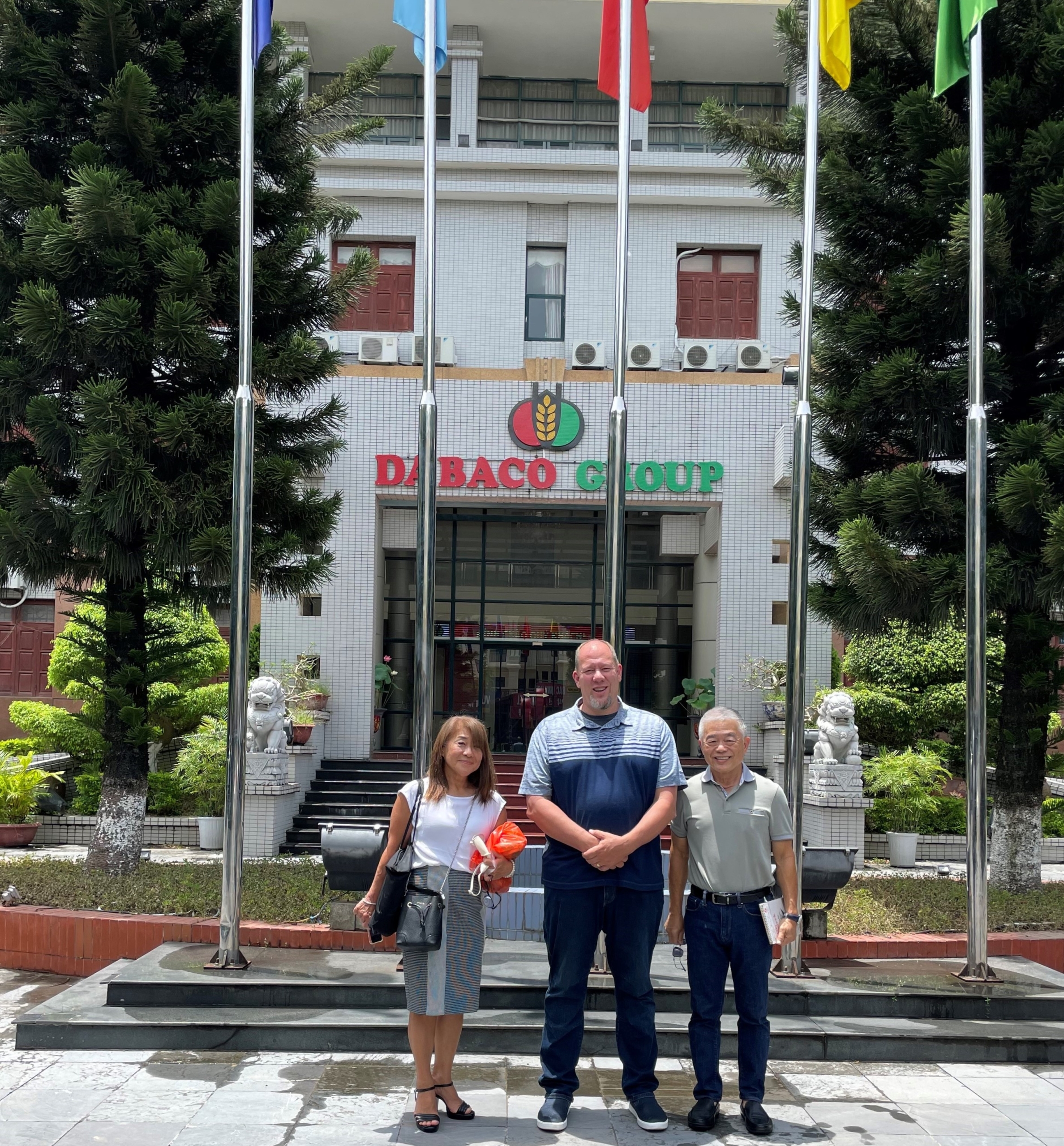
Following their visit with Vinasoy, a Vietnamese soymilk and soy drink producer, Huynh believes the prospect of Vinasoy importing U.S. Identity Preserved soybeans to be high. Vinasoy staff recently returned from the Food Grade Soybean Procurement Course at Northern Crops Institute in Fargo, N.D. Prather and Huynh also met with Dabaco, a feed and food production company and have more visits planned.
Next week, Prather will meet up with Manager of Strategic Programs Shane Frederick in the Philippines for a USDA trade mission to Manila that features several state departments of ag, state and national commodity associations and agribusinesses for tours and business-to-business meetings.

In both countries, SSGA is talking about the U.S. Identity Preserved assurance plan and brand mark and preparing for an international launch later this year in Ho Chi Minh City, Vietnam.

“After spending much of the last two years talking to customers virtually about identity preserved soybeans and specialty grains, we are thrilled to be able to start having those conversations in person,” Frederick said. “This USDA trade mission to Manila and other trips are perfect opportunities to highlight the new U.S. Identity Preserved mark and explain what it represents – the great care, commitment and close attention that IP farmers, processors and shippers undertake to fulfill the needs of their customers.”

In the coming months, SSGA technical advisers Alyson Segawa (North Asia) and Philip Shull (South Asia) will be traveling to Japan and India and Nepal, respectively, along with board directors, and our alliance is looking ahead to more opportunities in the future. In India and Nepal, SSGA representatives will participate in three seminars organized by the U.S. Soybean Export Council that will extol the quality and value of U.S. identity preserved soybeans. In addition to meeting with the trade, SSGA will meet with India’s Soy Food Processors Welfare Association (SFPWA) and Foreign Agricultural Service-New Delhi to discuss SFPWA’s efforts to secure a tariff rate quota for food grade soybeans from the Indian government.

Look for reports on each of these trips in future SSGA newsletters.

SSGA addresses buyers in Indonesia

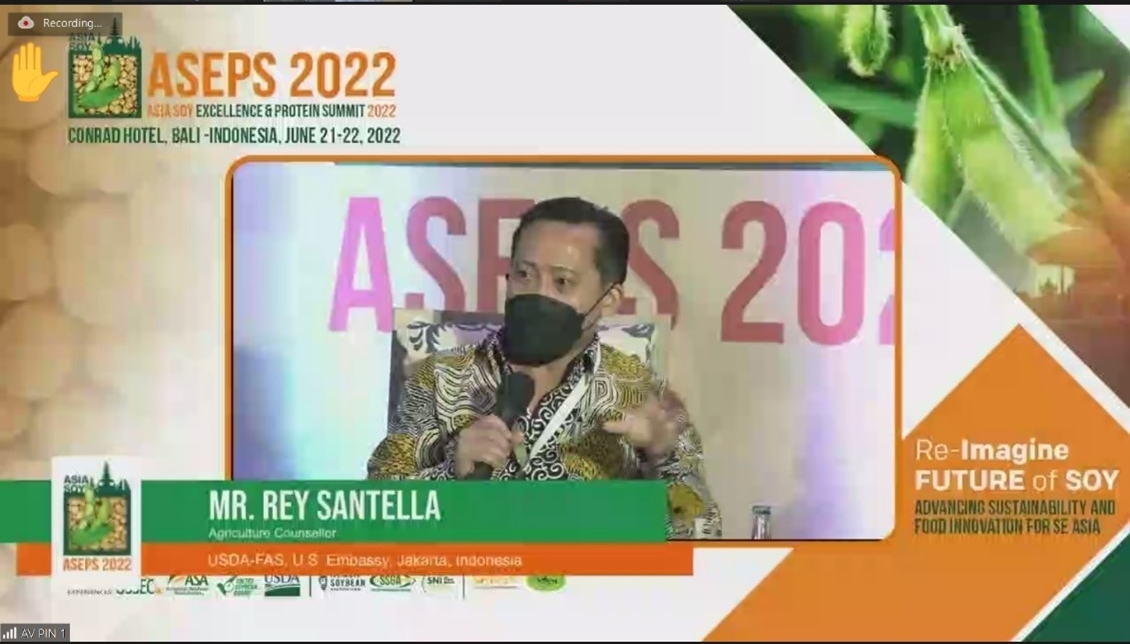
With food availability a concern in Indonesia, USDA Foreign Agricultural Service Agriculture Counselor Rey Santella emphasized the need for the United States and Indonesia to keep trade open to help feed each other in his address at the Asia Soy Excellence & Protein Summit.

SSGA had the opportunity to weigh in on that concern during the conference, hosted by the U.S. Soybean Export Council (USSEC) June 21-22 in Bali. Presenting virtually, SSGA Executive Director Eric Wenberg and Chair Rob Prather briefed about 150 attendees on current identity preserved (IP) crop production issues, logistics and container shipping during the hybrid event. Steve Peach, a Michigan farmer and member of the Michigan Soybean Committee, and Troy Berndt, a grower relations specialist in Wisconsin, updated attendees on the 2022 growing season in their respective states/regions.
Attendees were interested to learn about container shipping challenges. While most of these challenges likely will continue into the next shipping season, they are expected to progressively improve. Prather encouraged buyers to order from U.S. exporters as soon as possible, not only to help plan logistics but to allow U.S. farmers ample time to grow IP crops with the exact qualities and characteristics requested by the end users. Ordering IP crops in advance also improves efficiencies in production plans for manufacturers focusing on quality.

Wenberg and Prather also emphasized the importance of partnerships between groups like SSGA and USSEC and how buyers should seek out educational materials, such as SSGA University and the U.S. Soy Excellence Center. Wenberg also spoke of SSGA’s international launch of the U.S. Identity Preserved brand mark, which is scheduled to take place in Southeast Asia in November.


U.S. exporters and Chinese importers talk IP

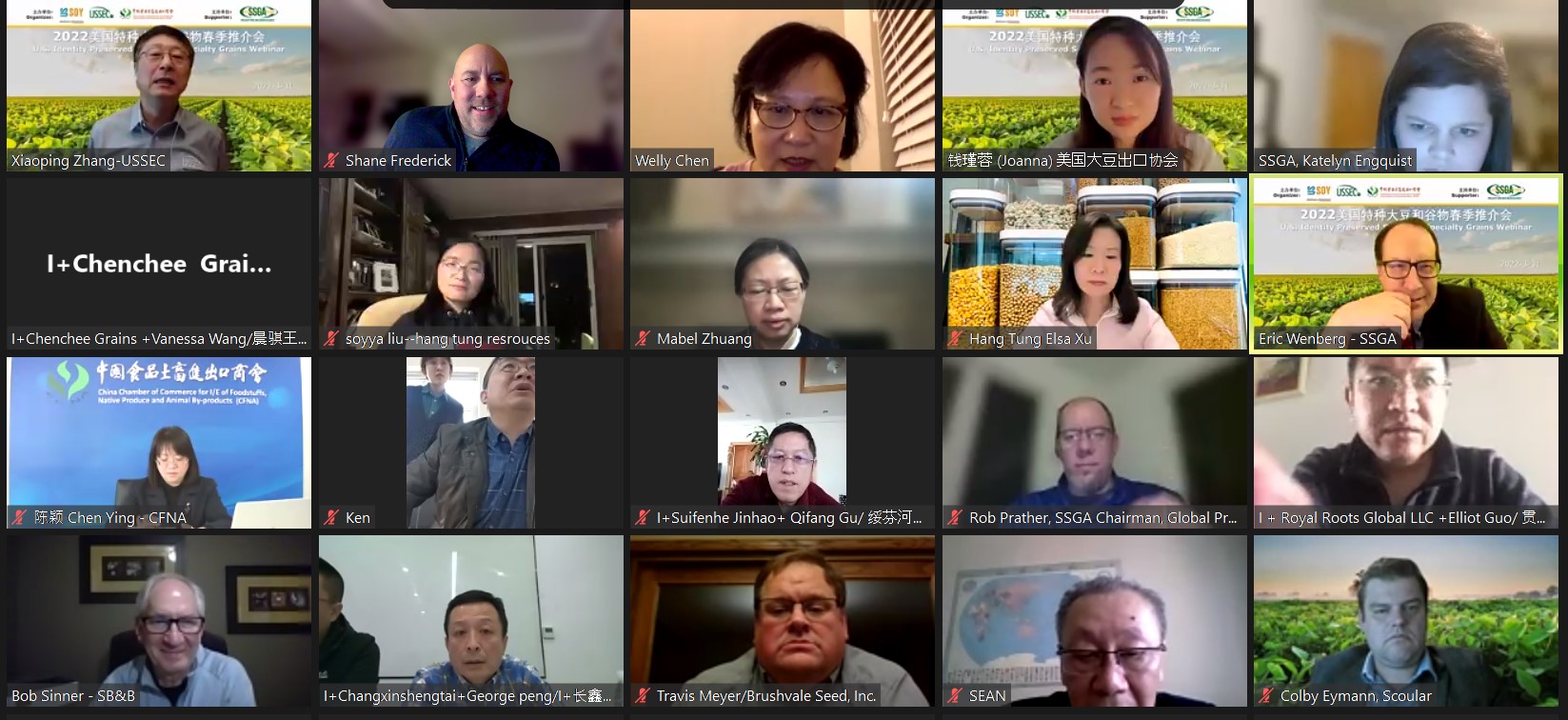
Nearly 150 people met online on March 30 for an U.S. Identity Preserved webinar and IP B2B meetings between SSGA-member exporters and potential buyers from China.

The event was held in coordination between SSGA, the U.S. Soybean Export Council (USSEC) and the China Chamber of Commerce of Import and Export of Foodstuffs, Native Produce and Animal By-Products (CFNA).
Following remarks from USSEC CEO Jim Sutter, CFNA President Cao Derong, U.S. Embassy Beijing Acting Deputy Chief of Mission Bobby Richey and SSGA Executive Director Eric Wenberg, watched and participated in three presentations about U.S. Identity Preserved field crops. SSGA Chair Rob Prather of Global Processing gave an overview of IP soybeans and grains. SSGA Secretary/Treasurer Colby Eymann discussed IP traceability and sourcing and Hua (Elsa) Xu of Hang Tung Resources talked about IP transportation.

“SSGA’s mission is to work with all our partners … to act as your expert in helping you learn how to purchase identity preserved field crops from the United States and how to profit by including them in the food products you manufacture,” Wenberg told the group. “What we are trying to do is explain in a structured way how the high-quality specialty field crop market means paying a bit more in advance can do for you.”

The webinar was followed by IP B2B matchmaking sessions between SSGA member suppliers and Chinese food manufacturers. Those who were not involved in the B2B meetings stayed on and participated in Q&A to learn more about U.S. Identity Preserved practices and efficiencies.

OSPA receives affirmative final determination on India matter

The Department of Commerce on March 18 announced its affirmative final determinations in the antidumping duty and countervailing duty investigations of organic soybean from India.

The petitioners in the case were the Organic Soybean Processors of America (OSPA) and the following processors: American Natural Processors LLC (S.D.), Organic Production Services LLC (N.C.), Professional Proteins Ltd. (Iowa), Sheppard Grain Enterprises LLC (N.Y.), Simmons Grain Co. (Ohio), Super Soy LLC (Wis.) and Tri-State Crush (Ind.).
Once Commerce issues an affirmative final determination, the United States International Trade Commission, an independent agency, examines whether a U.S. industry has been injured as a result of dumped and/or subsidized imports. The ITC makes its final injury determination May 2, approximately 45 days after Commerce’s final determination. If ITC’s final determination is affirmative, Commerce will issue antidumping and countervailing duty orders. If ITC’s determination is negative, the investigation will be terminated.

More information, including final dumping and subsidy rates and import statistics can be found at this link.

SSGA has supported the OSPA in its petition, which alleges that organic soybean meal from India is being sold in the United States at less than fair value and that India is providing unfair subsidies to Indian producers and exporters of organic soybean meal to the U.S.

OSPA is a domestic trade association established in 2018 to represent the organic soybean processing industry in the United States. It is a member-driven organization that advocates for fair and free trade, supporting economically sound decisions at all levels of government and works to advance access to safe, reliable organic feed.

SSGA presents to Indian soy food experts

On Dec. 22, SSGA was invited to present virtually to the International Conference on the Role of Soy as a Sustainable Protein Source for Health and Wellness, an event that took place in Indore, Madhya Pradesh, India. 

Newly elected SSGA Chairman Rob Prather was a co-chair for the virtual session and also presented on buying Identity Preserved field crops from the United States. SSGA Manager of Strategic Programs Shane Frederick then presented on the new U.S. Identity Preserved Assurance Plan and brand mark, which was launched on Dec. 2, and SSGA University. 

The fifth-annual conference was put on by India’s Soy Food Promotion & Welfare Association and included industry experts from India and around the world. Invitees also included officials from Indian government departments and ministries. 

The virtual session on U.S. soy also included presentations from USSEC and IFF Nourish. 

U.S. suppliers give update to Japan’s natto industry

Natto suppliers from the United States on Monday evening had their second conversation of the year with Japanese companies in an online update meeting organized by the Specialty Soya and Grains Alliance, the U.S. Soybean Export Council (USSEC) and the Japan Natto Cooperative Society Federation (JNCSF).

The update was an opportunity to share information, including 2021 post-harvest crop conditions and an outlook for 2022. Presenters represented different companies in different regions of the United States.

Natto is a traditional Japanese food, commonly eaten at breakfast, that is made from fermented soybeans. Natto is popular in Japan for its health benefits. The U.S. supplies about 70% of the soybeans for Japan’s natto industry. Natto beans are small, with a clear hilum and thin seed coat.

“Anytime you have interaction in this relationship with the natto association, it’s pretty special for all suppliers,” said Bob Sinner, SSGA board director and president of SB&B Foods. “Following our first Natto Summit there was so much appreciation for the dialogue that was created to address challenges and opportunities.” 

The third Natto Summit took place in Fargo, North Dakota, in 2019. COVID has delayed the next one, although the hope is that it will take place in 2022.

“Everyone is anxious for the next natto summit,” said Sinner, who co-hosted the U.S. presentations, “and this dialogue was to fill the gaps through the pandemic. It’s important for us to communicate not only our crop size, because of the volatile weather we had in 2021, but the crop quality, so there are no surprises.”

Scott Sinner of SB&B, Bruce Wymer of Citizens LLC in Michigan, Tal Taggart of Taggart Seed in Arkansas and Tom Taliaferro of Montague Farms in Virginia, gave regional condition reports. Rick Brandenburger of Richland IFC reported on the state of the U.S. food-grade soy industry and variety development and showed off the new U.S. Identity Preserved assurance plan and brand mark. Darwin Rader of Zeeland Farm Services presented on the current state of containerized shipping. The group also answered questions about tighter supplies and higher costs that are affecting the market and how those could translate to the natto manufacturers’ production costs next year.

Members of the JNCSF said consumption of natto is rising in Japan, and that higher prices should not deter that climb. They added that there is strength in their partnership with U.S. soy producers and that they’re continuing to promote natto as a safe, tasty, healthy food both in Japan and to overseas customers.

In addition, USSEC’s Will McNair presented on the Specialty U.S. Soy Database, which is an online tool to help those looking to source soybeans specifically for use in soy foods, including natto.