
IP Crop Network: June 9 report
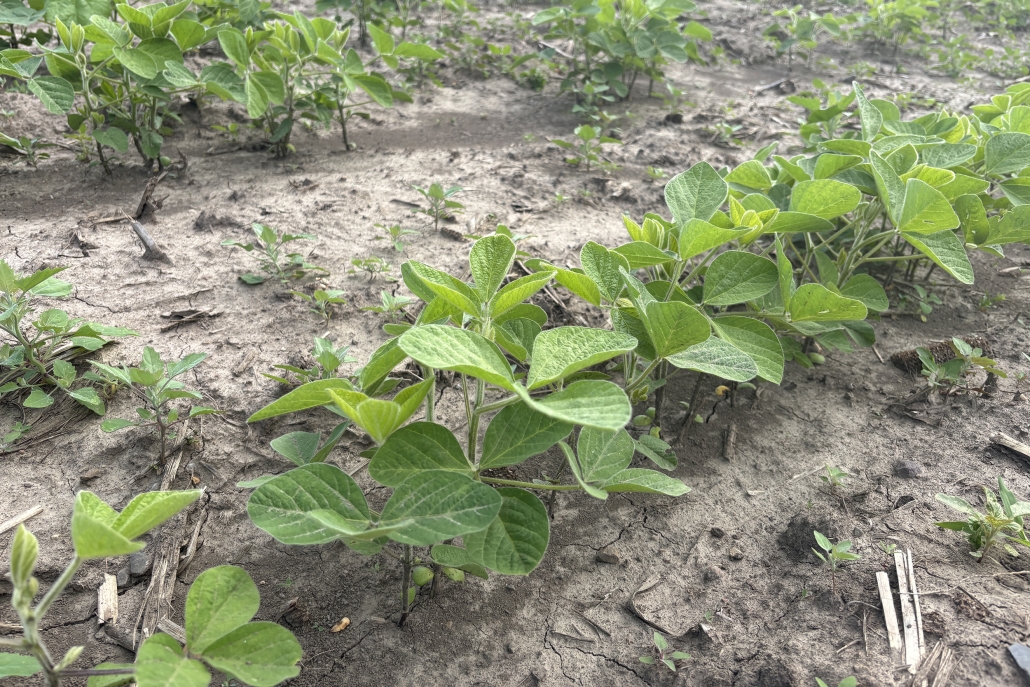
The soybean crop in the Upper Midwest is nearly 100% planted. With above normal temperatures and timely rainfall, most of the soybeans are in good condition. The crop is growing rapidly, and it’s nearly time for the first application of post-emergence herbicide for some of the earlier planted fields. With rain and good temperatures in the forecast, the crop should continue to look good.
Soybean conditions across much of southern Wisconsin have improved quite a bit after rain that moved through over the weekend. Many areas picked up more than two inches of rainfall, giving fields a much-needed boost after some had started to dry out following a busy planting season. Emergence has looked strong across the region, with soybean stands coming up evenly and showing good overall health. Most acres are now established, and the recent moisture should help support growth while easing concerns about uneven emergence, especially in lighter soils. Across the state, 79% of soybeans have emerged, which is 7% above average. The rain also helped recharge soil moisture levels, which is improving crop vigor and encouraging root development as we move into mid-June. Looking ahead, warm temperatures and plenty of sunshine will be key to keeping that momentum going. With emergence largely wrapped up and moisture conditions much improved, soybean fields are in good shape heading into the early vegetative growth stages. Overall, crop conditions are rated as good, and the recent rainfall has relieved short-term moisture concerns across much of the area.
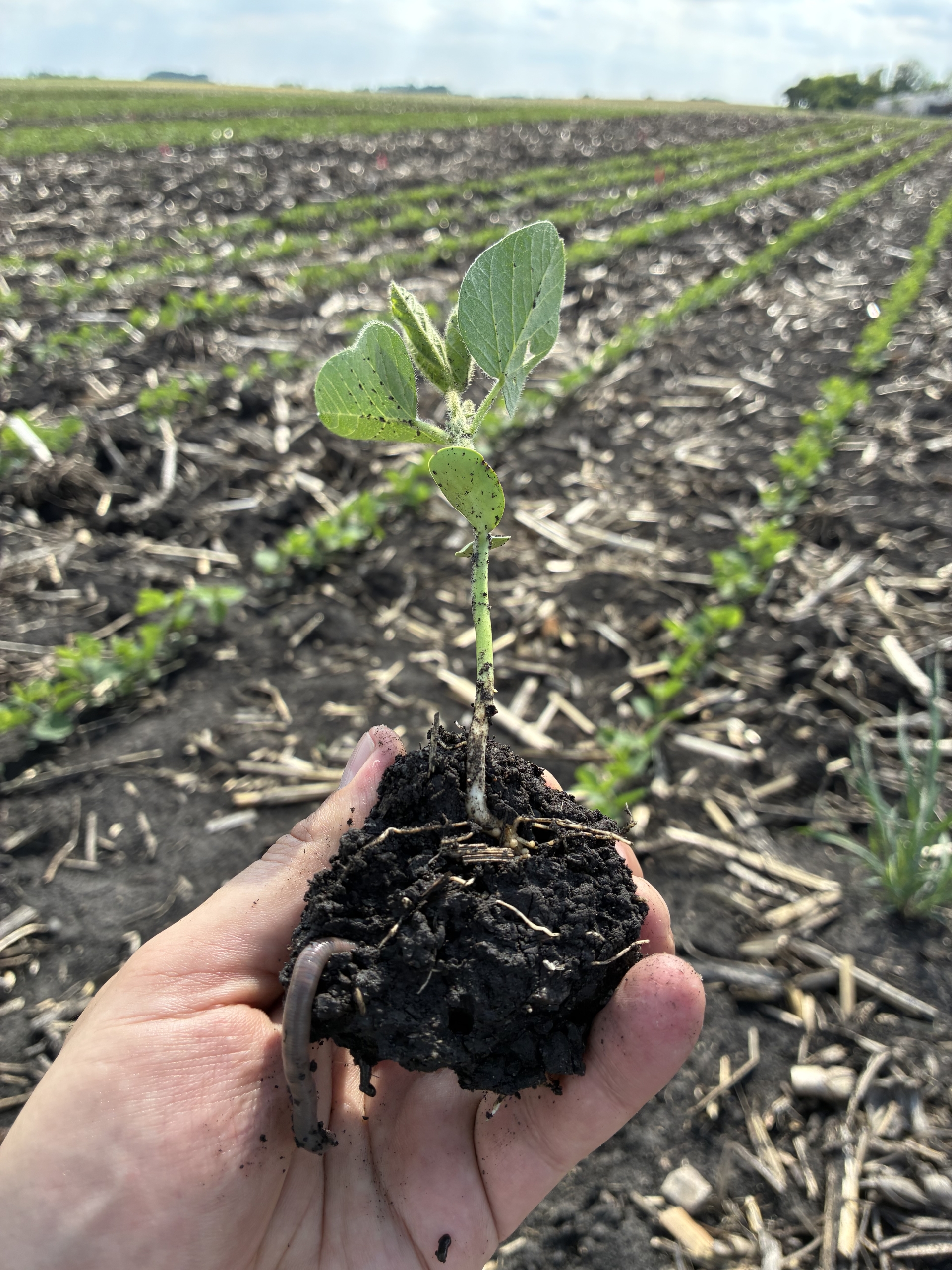 Minnesota soybeans and other row crops are developing well across most of the state. Over the past two weeks, much of southern and northern Minnesota has received 0.5 to 1.5 inches less rainfall than average. During the same period, temperatures have ranged from 2°F to 7°F above normal, accelerating crop growth following a cool start to the growing season. Most soybean fields in southern Minnesota are at the V2 to V3 growth stages, while fields in northern Minnesota are generally at V1. Corn ranges from V2 to V5 in southern Minnesota and from V2 to V3 in northern Minnesota. Disease pressure remains low across the state, although isolated cases of soilborne diseases such as Rhizoctonia root rot have been reported. Iron Deficiency Chlorosis (IDC) is also being observed in parts of central Minnesota. The severity of IDC during the coming weeks will depend on weather conditions, variety selection and the effectiveness of in-furrow iron applications. Insect pressure remains low across most of the state, likely due to the cooler conditions experienced earlier this spring. Looking ahead, the latest NOAA outlook suggests temperatures may trend slightly below normal over the next two weeks, while precipitation is expected to remain near average. Waterhemp and kochia are expected to grow aggressively in the coming weeks, and most fields remain several weeks away from canopy closure. Timely weed control will be critical to protecting yield potential throughout the season.
Despite planting delays, Michigan soybean acreage is 81% planted, with 49% emergence reported in the May 31 USDA NASS Crop Progress Report. Overall, the soybean crop has strong potential. A small number of fields planted in marginal conditions are experiencing slower emergence and less than ideal stands; however, the outlook remains positive. The most advanced soybean fields are at the V2 to V3 growth stages, while the majority are currently in the unifoliate stage. Temperature and growing conditions across Michigan have been more favorable in the last few weeks, contributing to good seedling health.
This twice monthly report highlights growing conditions for identity preserved crops from different regions around the country. The reports include both first-hand accounts and data from the National Agricultural Statistics Service (NASS) weekly Crop Progress reports.


Leave a Reply
Want to join the discussion?Feel free to contribute!