
Spotlight: Morocco
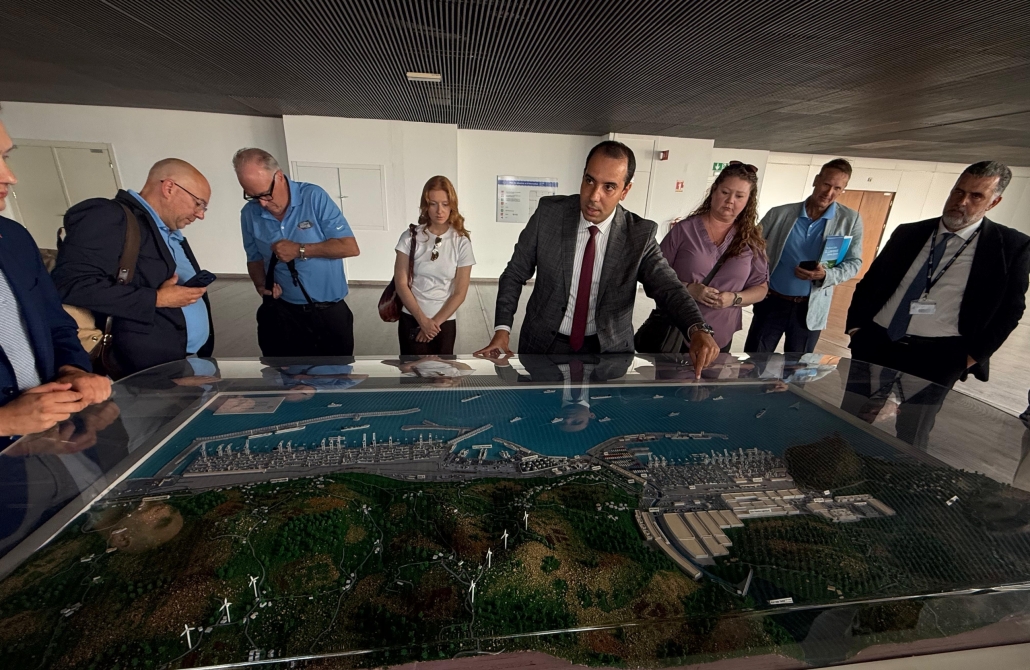
The U.S. Identity Preserved Alliance’s St. Lawrence Seaway Trade Revitalization Program’s 2026 trade mission began this week in Morocco with visits to ports in Casablanca and Tangier.
Morocco continues to be a growing market for U.S. agriculture and is an important geographic location as a global passage and key crossroad to the Mediterranean and Middle East, as well as to the rest of Africa. More than 100,000 commercial ships per year – 300 per day – pass through the Strait of Gibraltar, the narrows between Morocco and Spain along which Tangier’s Tanger Med port sits.
U.S. Identity Preserved Alliance held a seminar for port representatives in Casablanca, speaking about opportunities and challenges for two-way trade between Moroccan ports and U.S. inland ports along the Great Lakes and St. Lawrence River. Speakers included Gary Williams, USIP Alliance director of transportation and regulatory affairs; Jazmine Jurkiewicz, St. Lawrence Seaway Development Corporation international trade specialist; Minnesota soybean farmers Paul Freeman and Ron Obermoller; Emily Jerve, Minnesota Department of Agriculture domestic marketing supervisor; and Jacob Leum, Wisconsin Department of Agriculture, Trade and Consumer protection international trade representative.
Two-way trade is important to the north-central states, as the imports of products into the St. Lawrence Seaway bring vital equipment, such as containers, to inland ports that could take value-added agricultural exports back out.
Since opening in 2017, Tanger Med has become the largest container port in Africa and 17th largest in the world. The port’s terminals operate well above original capacity design, meaning continued expansion of the container market in Morocco is strong. This coincides with burgeoning container capabilities on the Great Lakes, including upcoming opportunities in Burns Harbor, Ind., Monroe, Mich., and recently renewed capacity at Duluth-Superior (Minn., Wis.).
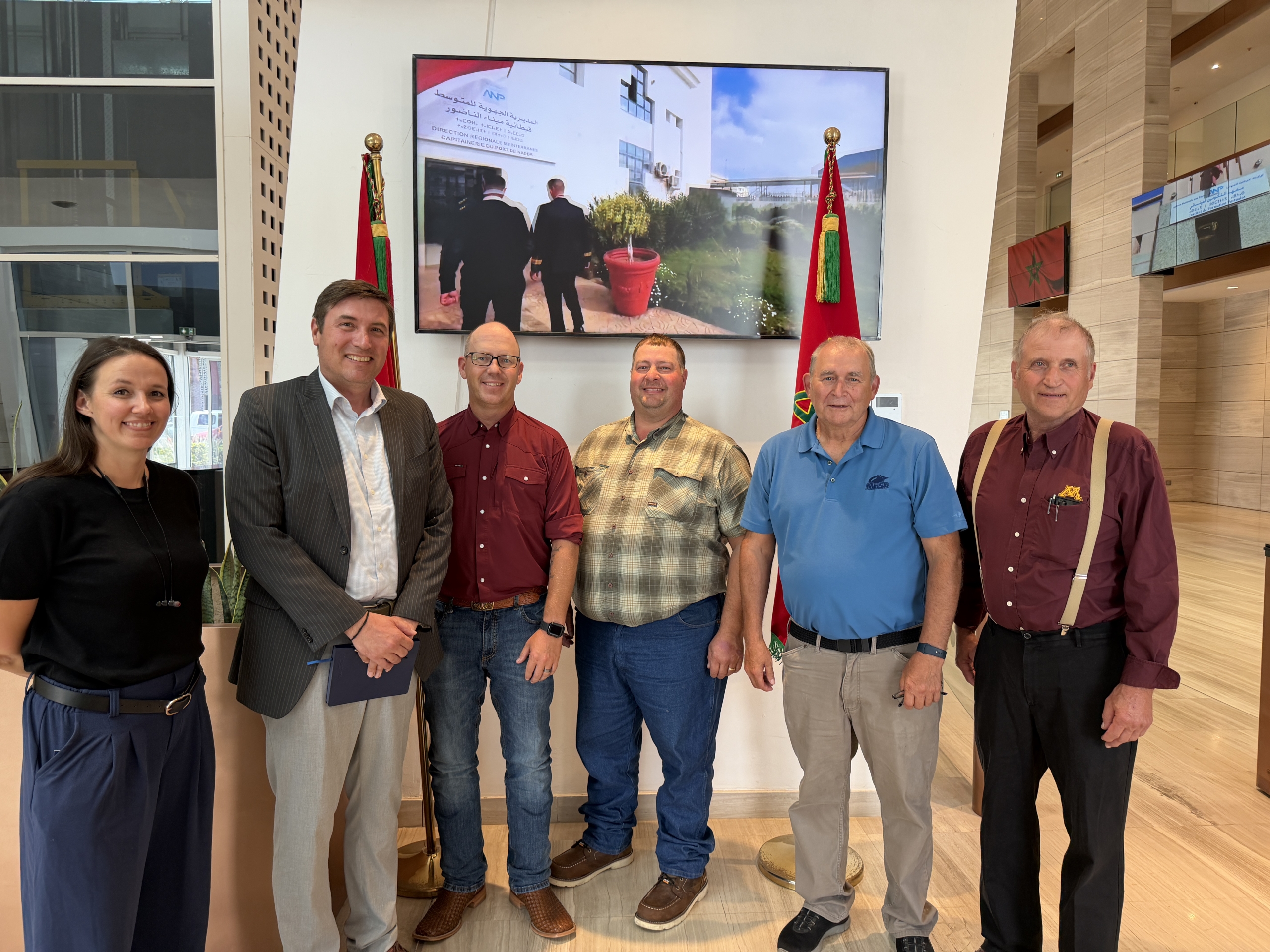 At Casablanca, officials from the National Ports Agency discussed expansion of Casablanca and other ports in Morocco, noting plans to deepen ports to accommodate Panamax and post-Panamax vessels. While the port moved 32 million metric tons of cargo in 2025, there is capacity to handle 50 million metric tons, along with future expansion.
Other Moroccan ports, including deep-water port project in Dakhla, provide more opportunities to satisfy consumer demand and the growing population throughout Africa, with dry-port movement to landlocked countries Mali, Chad, Niger and Burkina Faso.
The delegation was impressed with the connectivity among Moroccan ports, particularly after seeing firsthand the benefits of its geographic location. And one seminar participant explained that Morocco’s crossing point benefits new repair and distribution opportunities, allowing for reuse of products to meet consumer demand elsewhere on the African continent.
Following the Moroccan leg of the trade mission, the delegation moved on to Portugal for port visits and seminars in Lisbon and Porto. Other seminar speakers for those events include Wisconsin soybean farmers Jonathan Gibbs and Matt Wagenson, Ohio farmer Adele Flynn, and Christina Connelly, Minnesota Department of Agriculture international trade supervisor.
USIP Alliance’s St. Lawrence Seaway Trade Revitalization Program is supported with funding from Wisconsin Soybean Marketing Board, Minnesota Soybean Research & Promotion Council, Ohio Soybean Council and Illinois Soybean Association.


Leave a Reply
Want to join the discussion?Feel free to contribute!