Tariff talk: Director of Transportation & Regulatory Affairs breaks down the latest news

Confused by all the numbers and acronyms related to the recent Supreme Court decision and subsequent statements?  We sure were, and decided to understand for ourselves a little better (with a polite assist from AI to track down information sources…)   – Gary Williams, Director of Transportation and Regulatory Affairs, U.S. Identity Preserved Alliance

What the Supreme Court took away:

Despite losing IEEPA as a catch‑all tariff vehicle, the Administrative branch retains several statutory paths embedded in the Trade Act of 1974 and other laws that can still support new or continued tariffs, though usually with more process, limits and litigation risk.

Section 301: “Unfair trade” tariffs (“China Built Ships, Ship-to-Shore Cranes, and Container Chassis Tariff”):

Taken together, the ruling creates a shift from a single, sweeping emergency statute to a patchwork of targeted trade laws that come with clearer limits, procedural requirements and more obvious points of legal attack.

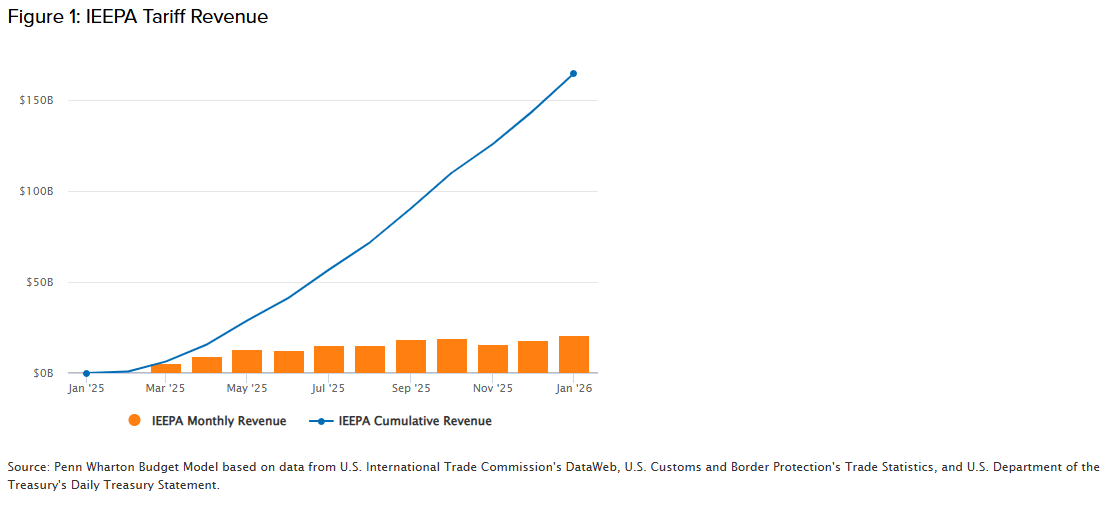
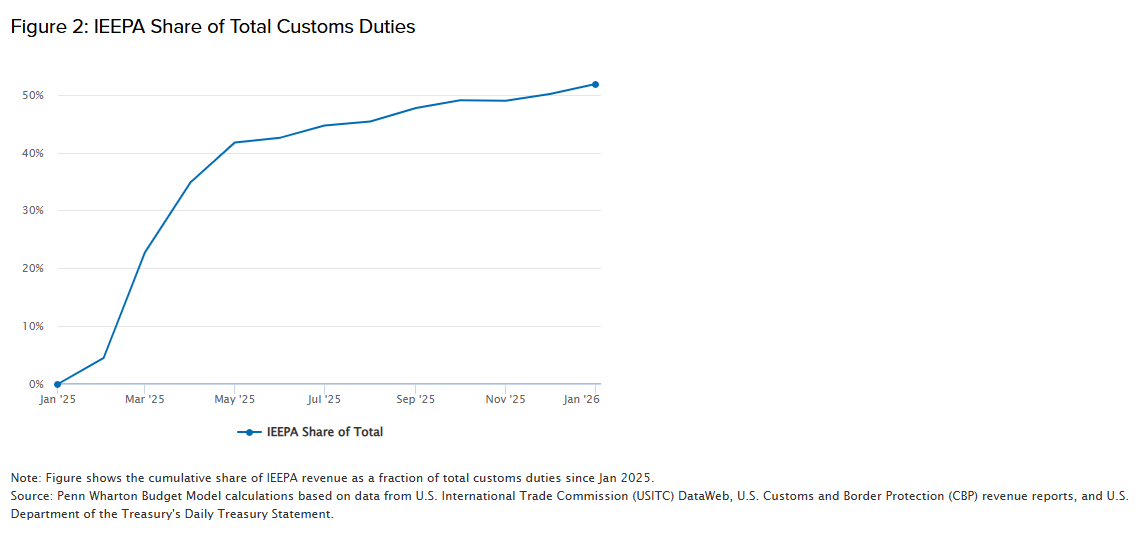
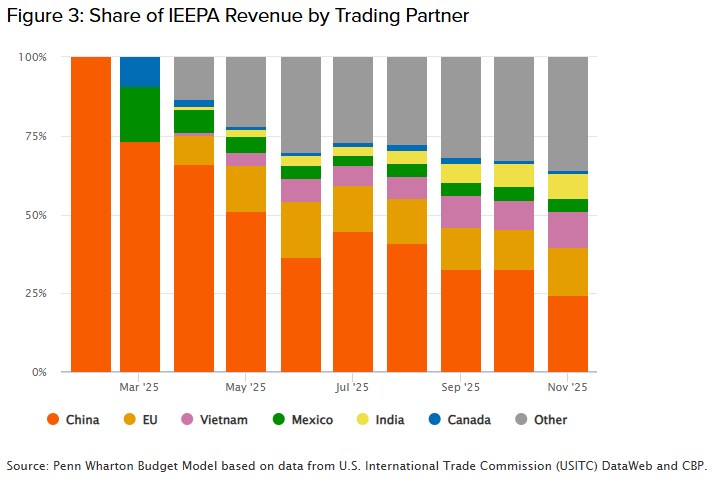
IEEPA can no longer serve as an all‑purpose vehicle for reciprocal or politically driven tariffs; those duties are being dismantled and may generate large refund liabilities.

In response, the administration is leaning on Section 122 for a time‑limited global surcharge, Section 301 for country‑ and practice‑specific retaliation, and Section 232 for security‑framed tariffs that remain legally intact for now.

President Donald Trump and USTR Jamieson Greer have made clear that tariffs will remain central to the administration’s trade strategy, even if each new measure now has to be anchored in more traditional trade statutes rather than in open‑ended emergency powers.

How is transportation affected?

As an opinion, these tariffs are meant to be a temporary negotiating tool to obtain the desired trade agreement in bilateral rather than broadly-based trade agreements. If carried long-term, outwardly the effect for value-added shippers would be:
Sources: The White House, The Supreme Court, Reuters, NY Times, Holland & Knight, The Budget Lab, Penn Wharton Budget Model, U.S. Identity Preserved Alliance

U.S. Identity Preserved Alliance’s Legislative Team visits D.C.

The United States Identity Preserved Alliance Legislative Team carried a strong message to Washington, D.C., in early February, focusing on export logistics, regulatory reform and long-term support for identity preserved markets. 

A primary focus of the trip was the team’s decision, in consultation with the Competitive Shipping Action Team, to assume a leadership role by advancing a proposal to Sen. John Thune’s (S.D.) office, with the goal of securing bipartisan co-sponsorship of an amendment to the Federal Maritime Commission reauthorization legislation currently before the Senate Commerce, Science and Transportation Committee. 

Throughout meetings with House and Senate offices, the team highlighted a proposed amendment aimed at addressing costly volatility in earliest return dates (ERDs) and related export logistics disruptions. Staff for Reps. Mary Miller (Ill.) and Brad Finstad (Minn.) and Sens. Kevin Cramer and John Hoeven (N.D.), Amy Klobuchar (Minn.), and Thune were briefed on how frequent earliest return date (ERD) changes undermine containerized exports and drive-up costs for shippers, particularly identity preserved and specialty grain exporters. The team emphasized that while the Ocean Shipping Reform Act improved rules on detention and demurrage, it did not fully capture ERD-related abuses and needs a statutory fix. 

Multiple offices requested a copy of the U.S. Identity Preserved Alliance’s letter to Sen. Thune outlining amendment language, and several suggested additional outreach to Commerce, Transportation and Infrastructure Committee members and other key senators and representatives to build bipartisan support. 

 A second core theme of the visit was inland intermodal container availability and the need for a sustainable public–private solution to reposition containers into key producing regions. The legislative team described ongoing work with USDA and industry partners on a potential partnership model to improve container flows for exporters in the Midwest and other interior origins. Congressional offices were briefed on how chronic equipment shortages and unreliable inland ramps are undermining U.S. export competitiveness and threatening premium identity preserved supply chains. 

USDA’s High-Quality Specialty Grains–linked phytosanitary program was highlighted as a proof point: thousands of container inspections have been completed through the U.S. Identity Preserved Alliance-administered program without any reported foreign buyer issues. The team also reiterated the need to extend that success to additional specialty crops, including peas and pulses. 

The trip included a substantive series of discussions at the Federal Maritime Commission, where the delegation met with newly confirmed Chairperson Laura Dibella, along with Commissioners Max Vekich, Dan Maffei and Rebecca Dye. The team outlined the ongoing concerns about unreasonable practices tied to booking procedures and shifting ERD dates. 

Visits with the American Soybean Association, National Grain and Feed Association, and North American Export Grain Association underscored organizations’ mutual interests and continuing to foster an open collaborative effort and open dialogue between these organizations and rounded out the itinerary. 

Across meetings with Congress, USDA and industry groups, the team underscored the organization’s rebranding from Specialty Soya and Grains Alliance to the U.S. Identity Preserved Alliance and its broader mission. 

U.S. Identity Preserved Alliance finds Surface Transportation Board decision ‘reassuring’

The Surface Transportation Board (STB or Board) announced Jan. 7 a unanimous decision proposing a significant pro-competitive action: repeal of 49 C.F.R. part 1144, which governs the prescription of reciprocal switching, through routes and through rates. Today’s Notice of Proposed Rulemaking (NPRM) would promote market forces in the freight rail industry. The NPRM would remove regulatory barriers that limit options for American businesses critical to our economy, including both shippers, such as manufacturers, utilities, and agricultural companies and railroads seeking to innovate and compete. In removing these regulations, the Board would employ reasoned case-by-case approaches. 

The deregulatory Staggers Rail Act provided the Board authority to require reciprocal switching under 49 U.S.C. § 11102 — transfers between rail carriers that take place within the shipment’s originating or terminating terminal area that are incidental to a line haul —when “practicable and in the public interest” or when “necessary to provide competitive rail service.” In addition, under 49 U.S.C. § 10705, the Board has statutory authority to prescribe through routes and rates — long distance movements performed by two or more carriers and the rates for those movements — when “desirable in the public interest.” 

The current regulations, adopted in 1985, have been interpreted to require shippers to demonstrate “anticompetitive conduct” and meet other requirements to obtain relief. The regulations narrowed the agency’s statutory discretion to issue competitive access prescriptions. Since the adoption of these regulations, the statutory framework has changed, the rail industry and its traffic portfolio have evolved significantly and the regulations no longer have broad support across rail transportation stakeholders. Despite the authority granted in the Staggers Rail Act over 40 years ago, the agency has never issued a prescription under part 1144. 

Today’s proposal would streamline the path for shippers to obtain competitive access before the Board, bringing the agency’s approach more closely in line with statutory intent. The NPRM would restore the Board’s discretion to consider—on a case-by-case basis—the merits of each case brought before the agency under the statutory standards set by Congress. The statutes recognize that competitive access issues do not have a one-size-fits-all solution and allow the Board to consider these cases in the full context of a carrier’s operations, competitive situation and other considerations. 

“Ahead of a potential merger that would reduce the number of class i’s and potentially limit arbitrage and access options, this is a reassuring step the STB is taking,” said Gary Williams, Director of Transportation and Regulatory Affairs for the US Identity Preserved Alliance. “We applaud this proposal and look forward to having Patrick Fuchs appearing for attendees at the upcoming Transportation Go! conference, where the subject of the merger and reasonable rail service assurance will for certain be one of the topics that will get a good amount of discussion.”   

This action follows the March 2025 launch of the U.S. Department of Justice’s Anticompetitive Regulations Task Force in response to Executive Order 14192, which declares a policy that federal agencies “alleviate unnecessary regulatory burdens placed on the American people.” Responding to the Task Force’s request for comments, many rail shipper groups — collectively representing chemical, agricultural, energy and other businesses that use rail, many of which are small and medium-sized with limited to no transportation choice — submitted comments seeking action on part 1144. 

More details and the original announcement by the Surface Transportation Board can be found here: https://www.stb.gov/news-communications/latest-news/pr-26-01/ 

“This proposal would embrace market forces, enable meaningful choice for American businesses as provided under the statutes, and eliminate regulatory barriers unnecessarily stifling rail competition,” said STB Chairman Patrick J. Fuchs. “By proposing to remove these regulations, the Board would return to the text of statutes that advance excellence, entrepreneurship, and innovation to support economic growth and supply chain resilience.”   


Industry groups bring questions for UP/NS Merger

In light of the Dec. 19, 2025, Union Pacific Railroad (UP) merger application filing with the Surface Transportation Board, different industry groups are surfacing with their questions and challenges for the approval of a coast-to-coast railroad merger.   

Recently, the National Grain and Feed Association (NGFA) filed comments with the STB that underscore the incompleteness of UP’s application and encourages STB to request additional information before considering the application as complete. 

NGFA’s comments reference the Major Rail Consolidation Procedures that STB implemented in 2001, which requires a major merger application to contain specific and detailed information about how the applicants will not only preserve existing competition but enhance it, as well. This encompasses a plan to combat every competitive harm that could result from the merger, not just the loss of rail-to-rail competition.  

NGFA states, “while the application does outline three “commitments” to preserve and enhance competition, only one of the commitments – “a Committed Gateway Pricing program to extend the merger’s benefits to more customers” – enhances competition. Competitive harm is a serious consequence affecting not only rail shippers but entire sectors of the economy through the elimination of markets and destinations for products and services”. NGFA’s comments highlight the need for a more robust, detailed plan instead of the vague and generic discussion highlighted in UP’s application. 

Furthermore, in its comments, NGFA also pointed out that the proposed Service Assurance Plan is unsatisfactory. The plan doesn’t comply with the requirement for a process to compensate shippers for service failures and provides little information on back-up or contingency plans involving other rail carriers. Many in the grain industry have consistently urged for Service Level Agreements that guarantee minimum levels of service as a rail provider be instituted – past mergers have promised service assurance, only to have fallen well short of those promised increased levels of service and benefit to shippers.  

The U.S. Identity Preserved Alliance will host a webinar February 11 to present perspectives from industry associations and experts on the potential benefits and challenges of a proposed merger between Union Pacific and Norfolk Southern. Transportation Go, taking place April 8-9 in Chicago, will likely fall within the public comment period for the merger and will feature discussions among stakeholders supporting and opposing the proposal. 

Schneider highlights takeaways from SSGA DC meetings

Ahead of Soy Connext, an SSGA delegation met with policymakers and agency leaders in Washington, D.C., to advance the association’s transportation and program priorities.

The delegation was led by Jennifer Schneider, newly appointed chair of SSGA’s Competitive Shipping action team, and Gary Williams, SSGA’s director of transportation & regulatory affairs. They held meetings with Federal Maritime Commission (FMC) Commissioners Max Vekich, Rebecca Dye and Daniel Maffei focusing on issues such as Section 301 tariffs on Chinese-built ships, earliest return dates (ERDs) and container availability at inland intermodal points.

Schneider emphasized the positive and collaborative nature of the discussions. A central takeaway was the critical importance of documentation, especially regarding ERDs. FMC Commissioners encouraged SSGA to continue tracking and collecting concrete, evidence-based examples of issues being experienced, their frequency and the impact on business operations to better communicate the actual effects exporters are experiencing.

“What really jumped out to me during my first time in D.C. with SSGA was the willingness of everyone to listen and share pathways that can be followed for seeking solutions,” said Schneider, who works at Puris in Randolph, Minn. “FMC commissioners gave great suggestions on how to navigate within FMC with ERD suggestions. Going forward, documentation will be a key priority for the Competitive Shipping action team and SSGA members.”

SSGA also shared progress on programs with the St. Lawrence Seaway Trade Revitalization program, meeting with newly appointed Administrator Mike McCoshen of the U.S. St. Lawrence Seaway Administration and key staff, as well as with others discussing this and other priorities of SSGA and its Competitive Shipping action team. The visits underscored the importance of collaboration with other organizations on policy and regulatory issues.

During a meeting with Allison Rivera, Vice President, Government and Legislative Affairs for National Grain and Feed Association (NGFA), the participants found common ground on several issues, including higher trucking weights across the nation for transporting agricultural goods. SSGA has been a voice for requesting pressure on U.S. Trade Representative to answer questions and provide clarity on the section 301 tariffs, particularly questions provided by the NGFA.

SSGA’s meetings in Washington also included visits with USDA Animal and Plant Health Inspection Service staff to provide updates and discuss plans for the High Quality Specialty Grains (HQSG) program. Congressional outreach included staff briefings for Reps. Angie Craig (D-MN), Brad Finstad (R-MN) and Rep. Robin Kelly (D-IL).

Member Profile: Scott Dorr brings Asian market experience to SSGA, ZFS

With decades of experience both working and living in Asian countries such as China and Japan, Scott Dorr was the perfect candidate to take over as the new international sales and marketing manager for the Michigan-based Zeeland Farm Services (ZFS) earlier in 2025. Even without experience in the world of soybeans, Dorr’s understanding of the Asian culture, its quality preferences and emphasis on relationships put him high on the list as the eventual replacement for recently retired SSGA Director Darwin Rader. 

“In December I took over Darwin’s position and we’ve been transitioning ever since, but I won’t let him retire fully,” Dorr said, jokingly. “This is my first venture with soybeans and Darwin knows so much about that industry, so he’s been a great help.” 

A native of Iowa, Dorr majored in Asian studies and international marketing at the University of Iowa before leaving the country to live and study in Japan for the next three years. He then returned back home where he spent the next few decades working with Asian countries in the dairy ingredient and animal protein industry. But after spending several months of the year on the road, Dorr decided it was time to spend more time with his family in their now home of Colorado. Taking advantage of the local access to antlers, Scott and his wife started their own pet products company selling hundreds of thousands of antler chews across the country each year. Working with farmers and industry in Nepal, they eventually began importing yak chews to their lineup of products as well.  

“We ran that business as sort of a second-chance company, hiring a lot of gang members who were trying to change their lives and purchasing antlers off Indian reservations and then supporting small farmers in Nepal with the yak chews,” Dorr said.  

With his kids out of the house and in college, Dorr’s interest returned to getting back on the road and back working in Asian countries, which is what brought him to his current role with ZFS. Founded by the Meeuwsen family in 1950, ZFS is a multigenerational family-owned and operated business working in the agricultural commodities and transportation industry.  

“It’s a very dynamic company with over 600 employees,” Dorr said, “and I’m very impressed to see a company get to its third and fourth generation and be as well run as it is.” 

Dorr’s focus with ZFS is managing their non-GMO soybean line and growing their market in that industry, using his experience to build relationships with customers in the Asian markets, who are the primary purchasers of non-GMO soybeans.   

“It’s especially important in countries like Japan that you maintain the highest quality possible and that you’re as reliable of a supplier as you can be,” Dorr said. “If you can sell to Japan with their high standards, you can sell to anywhere in the world.” 

But it’s not just Japan that has strict quality needs and regulations. Dorr notes that European markets have their own set of unique regulations that challenges American non-GMO producers to focus on sustainability and supporting the environment.  

“With the deforestation going on in Brazil, Europe is putting a lot of regulations in place to have an impact on that, but those same regulations apply to the U.S.as well, even though we haven’t seen deforestation in years,” he said. “So that means a lot more documentation, auditing and certification requirements for us to export into the European market.” 

And just like his predecessor, Dorr says he is looking forward to working alongside SSGA to make more connections to break into new markets.

“I know Darwin was very involved with SSGA and thought very highly of the organization,” he said, “so I know how important they are, and I look forward to working with them and their staff down the road.” 

New Member Profile: Non-GMO Project

The Non-GMO Project is a 501(c)(3) nonprofit organization that was established in 2007.  

“It was founded during a time when GMOs were kind of top of the news cycle,” said Cameron Miller, Non-GMO Project chief executive of business strategy and innovation. “There was concern across just the general populace at large about GMOs coming to the market.”  

Through this concern, two different retailers came together to consider how to inform consumers about what was in their food. 

The company’s mission is to build and preserve the non-GMO food supply for all. Through a rigorous standard, the organization provides labels to non-GMO foods, allowing consumers to choose for themselves if they want to purchase GMOs or not. This process allows the standard to remain consistent across different states, even if state regulations are different.  

“Our theory of change is that by creating a demand and premium for products that are non-GMO at the consumer level, we incent consumer packaged goods companies to create products that are non-GMO. Through that there’s a pull-through effect through the supply chain,” Miller said. “I would say we’ve exceeded our wildest dreams in terms of market impact.” 

Joining SSGA 

As one of the newest members of the Specialty Soya and Grains Alliance , the Non-GMO Project is hoping to expand its reach up the processing chain – not only reaching consumers, but producers and farmers as well. Some members  of SSGA are already Non-GMO Project-verified, but the organization is hoping to reach more in the early section of the supply chain. 

“I would say that SSGA is uniquely positioned, and we’re really excited to be a member and get to know your folks better and see how we might better help, support and add value for you all,” Miller said. 

Miller and Hans Eisenbeis, director of mission & messaging, presented about their organization during SSGA’s June 25 board meeting.  

SSGA Director Bob Sinner believes the addition of the Non-GMO Project to SSGA’s membership is a good fit. 

“The Non-GMO Project team has done a nice job gathering data as it relates to both non-GMO and organic consumer demand,” he said. “This fits well into the wheelhouse of SSGA IP suppliers of food quality ingredients as they analyze and expand their marketing efforts, particularly in the United States.” 


On the move: SDSRPC sponsors Transportation Go! conference

Transportation is essential to South Dakota farmers. Being a mostly agricultural state that exports nearly 40% of its farm products, commodities need to find their way out of the state to trade partners around the world. However, being located in the middle of the country creates some roadblocks.  

“The distance is some of it,” said Derrick Scott, District 2 director and Treasurer of the South Dakota Soybean Research & Promotion Council (SDSRPC). “We have somewhat of a rail network – it does the job but it’s not as expansive as other states. We don’t have use of our river due to the dam system that is on it, so we aren’t able to transport via water.” 

These issues were some of the topics of discussion at Transportation Go!, hosted by the Specialty Soya Grains Alliance (SSGA) in Minneapolis in March. SDSRPC is proud to sponsor the event. 

“This was my first time there, and I was very happy with the meeting: great group of speakers, great lineup,” Scot said. “They really delved into all different facets of transportation. We’re going to get more members to go next year.” 

With 60% of South Dakota’s soybeans leaving the country, it’s imperative that the soybean checkoff invests in projects and events like Transportation Go! to ensure their products arrive to customers. South Dakota soybeans typically leave the U.S. via the Pacific Northwest for countries in Southeast Asia. To get there, they are shipped by truck or rail – South Dakota has an interstate highway system and direct rail lines to the West Coast. This infrastructure allows products to leave the country cheaper and faster than competitors. 

“South America is our main competitor for soybeans, and they have a lot of issues when it comes to transportation,” Scott said. “The United States is leaps and bounds ahead of them as far as getting our product moved in a safe and in a quick nature. We’re able to get things out of here quickly, and the quality is maintained along that transport chain.”  

South Dakota lawmakers are also active in supporting agricultural transportation. In Washington, D.C., Senate Majority Leader John Thune has supported bills such as the Ocean Shipping Reform Act, which was passed into law in 2022. 

“The Ocean Shipping Reform Act was pivotal, as it defined the role of the Federal Maritime Commission as having authority to rule upon and assess penalties upon container carriers on matters for example, relating to detention and demurrage charges without proper information being documented or a process to dispute charges,” Gary Williams, director of transportation and regulatory affairs for SSGA, said. “Shippers’ rights and fairness are now protected by this process of being able to present their case to the FMC for investigation.” 

SDSRPC also invests in organizations like the Soy Transportation Coalition, which seeks efficient transportation for soy shippers and customers.  

Argus Murmurings: Argentina FX change will support exports to US

Organic soybean imports in March 2025 were estimated at 19,600 MT, down 31pc from the same month in the prior year. Ukraine supplied 16,000 MT and Canada supplied the remaining 3,600t. 

The Argus AgriMarkets Organic and non-GMO service weekly delivered spot price for feed-grade organic soybeans delivered to the U.S. Corn Belt for the week ended April 17, 2025, was $20.29/bushel, which is up $0.15 from a month prior and $0.81 from a year prior.  

The devaluation of the Argentinean peso will make Argentinean organic soybeans more price-competitive in the U.S., market contacts said. The devaluation of the peso will make Argentinean imports cheaper for U.S. buyers and Argentinian farmers will receive more pesos per dollar. 

There are little-to-no-remaining stocks of old crop organic soybeans remaining in Argentina, but the devaluation will affect new crop sales, market contacts said. New crop sales so far were below historical levels because of buyers hesitating to lock in volume before there was more certainty on tariffs. Lower buying activity from typical U.S. importers could leave more organic soybeans to be purchased by other importers. 

Shipments of new crop organic soybeans will begin in June, market contacts said. Argentinean farmers increased their organic soybean acreage because of the low profitability of organic corn. A drought earlier in the season did damage the crop, but yields are expected to be close to historical levels. 

IP Crop Network – April Report

To those in agriculture, spring is like a breath of fresh air; a clean slate to nurture and grow the next crop that will feed the world. SSGA’s IP Crop Network will be published twice a month, highlighting growing conditions for identity preserved crops from different regions around the country. The reports include both first-hand accounts and data from the National Agricultural Statistics Service (NASS) weekly Crop Progress reports. 

There has been very little planting in North Dakota. A small amount of small grains have been planted, including 10% of spring wheat. Three percent of sugar beets have been planted, slightly below the five-year average.  

Planting in Minnesota is just ramping up, too, with 3% of soybeans planted and 9% of corn planted. Several farmers in various locations around the state planned to start planting this week. 62% of topsoil and 53 of subsoil has adequate moisture. 

In northwest Wisconsin, soil conditions are quite dry and cool. There have been some early small grains seeded but very little corn or soybean planting has happened. Fertilizer is being broadcast and some light tillage on fields that are fit to be on. Sub-soil conditions are very dry. 

In southern Wisconsin and northern Illinois, there are some reports of food-grade soybeans being planted. Ground temperatures are slightly low but as temperatures rise this week, a significant increase in planting activity should follow.  

The southern third of Illinois is very wet. Some planting is occurring on dry ridges and sand, but overall, 10% of the state’s soybeans are planted and 7% of corn is planted. Growers in eastern Illinois reported fast and furious planting of soybeans in the last several days. One eager grower in eastern Illinois planted a small amount of soybeans in mid-March, but with too much moisture, the beans only just emerged a few days ago.  

There are just a few fields of soybeans planted in Michigan at this time. Most fields are a little wet and temperatures are cold. There is rain in the weather forecast but also warmer temperatures. Many growers are hopeful to begin planting the last week of April but will wait for good conditions.  

Growers will continue to monitor conditions and will eagerly begin planting as soon as their fields are ready. Stay tuned for more updates from SSGA throughout the growing season.  View the entire NASS report from April 21 here.