
USIP Alliance joins the conversation at AgTC Annual Meeting
Several U.S. Identity Preserved Alliance members and staff attended the Agriculture Transportation Coalition (AgTC) Annual Meeting last week in Tacoma, joining other agriculture transportation professionals for networking and education.
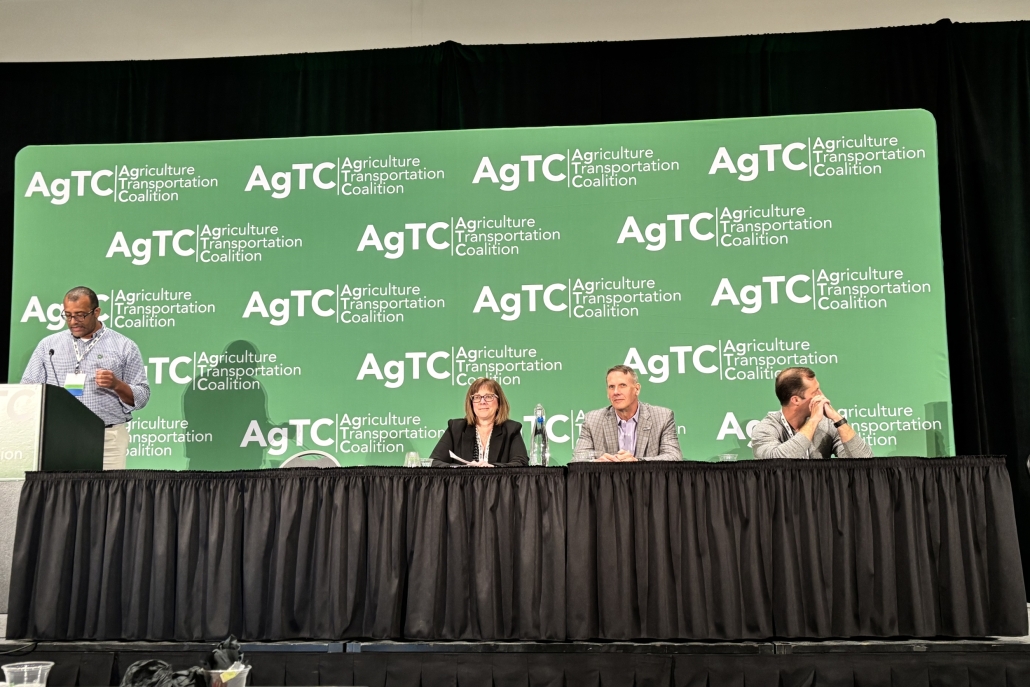
Competitive Shipping Action Team Chair Jennifer Schneider and Gary Williams, director of transportation and regulatory affairs, participated in a panel focused on the growing challenges agricultural exporters face from increasingly unstable vessel sailings, booking reliability and shifting Earliest Return Dates (ERDs). These disruptions often occur without notice and continue to drive significant cost increases and operational uncertainty across the supply chain.
Schneider provided a series of real-world examples illustrating how these inconsistencies directly impact exporters, including lost sales opportunities, reduced margins and ongoing difficulty in planning shipments. Her remarks underscored the compounding effect of unreliable service on agricultural commodities that depend on predictable logistics to remain competitive in global markets.
Williams complemented these insights by outlining recent advocacy efforts, including a letter submitted by the Alliance to members of the Senate Commerce Committee. The letter calls for greater attention to these issues within the context of the Federal Maritime Commission (FMC) reauthorization, urging policymakers to support enhanced data collection, transparency and regulatory guidance aimed at identifying and addressing problematic practices across the supply chain.
Broader market conditions were also a central theme of the discussion. Kuehne + Nagel presented for those gathered a cautious outlook for the national economy, while the Journal of Commerce offered a more tempered view, suggesting that recessionary pressures, particularly those tied to fuel costs, may not materialize as strongly as anticipated. Despite differing perspectives, speakers generally agreed that ongoing geopolitical factors, including rerouted vessels avoiding the Red Sea and congestion near the Strait of Hormuz, are extending transit times and tying up capacity, thereby supporting elevated base freight rates in a time when the container capacity should now be far overbuilt.
As rate structures continue to evolve, other panelists/speakers noted a clear distinction between fuel surcharges and base rates. Carriers have consistently demonstrated the ability to pass fuel-related costs through surcharges, while base rates remain largely insulated. At the same time, reiterating insights shared from the Northwest Seaport Alliance’s Peak Planning session highlighted how carriers are managing capacity, both through some delayed container production and increased container utilization, to prevent rates from falling sharply through the inefficiencies created in the ocean freight network.
This dynamic creates a delicate balance for exporters. While lower rates may appear beneficial, excessively depressed pricing can reduce incentives for carriers to prioritize export cargo or maintain service on less profitable routes. Conversely, high import-driven rate environments can encourage rapid repositioning of empty containers, further disadvantaging exporters. Panelists emphasized that a sustainable “middle ground” is needed – where rates support balanced trade flows without distorting service priorities.
Looking ahead, labor negotiations were also identified as a key variable. With the International Longshore and Warehouse Union contract set to expire in 2028, comparisons were drawn to the recent International Longshoremen’s Association agreement on the East Coast, which included a substantial 62% wage increase and limits on automation. Questions remain as to how West Coast labor negotiations will factor in global competitiveness, particularly from the perspective of U.S. exporters.
Finally, several participants highlighted emerging tools and data capabilities that track on-time performance, sailing reliability and other key metrics. These tools are increasingly being used to help both carriers and shippers better understand patterns, improve decision-making and adapt to ongoing volatility in the supply chain.


Leave a Reply
Want to join the discussion?Feel free to contribute!